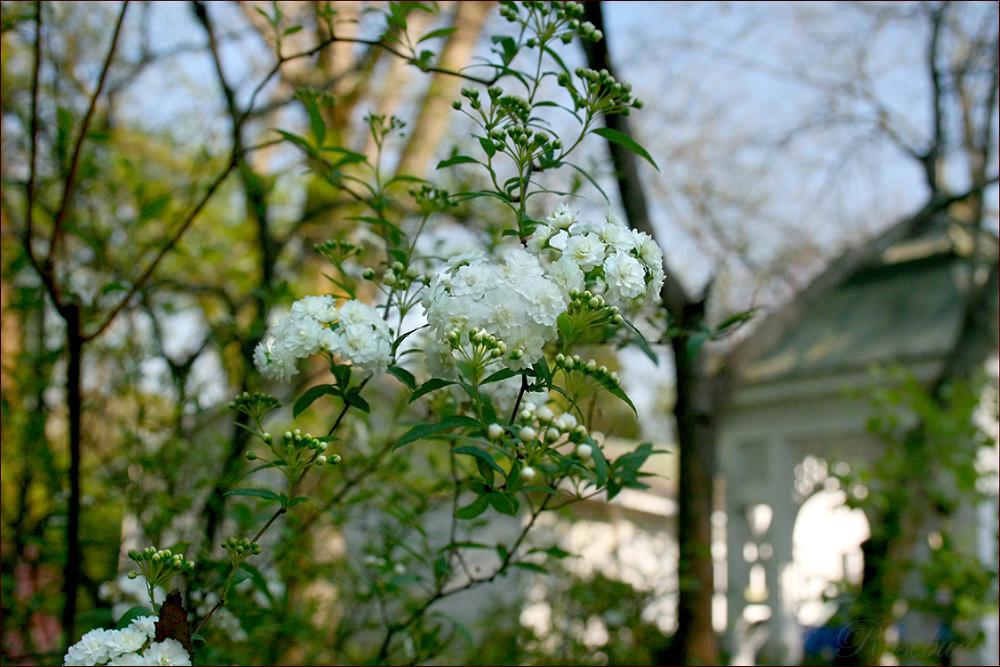
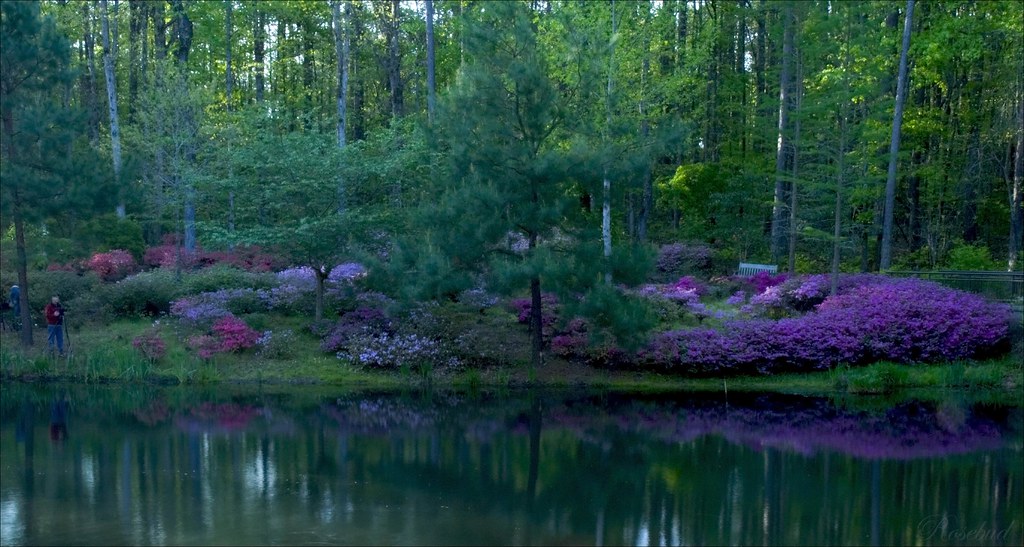
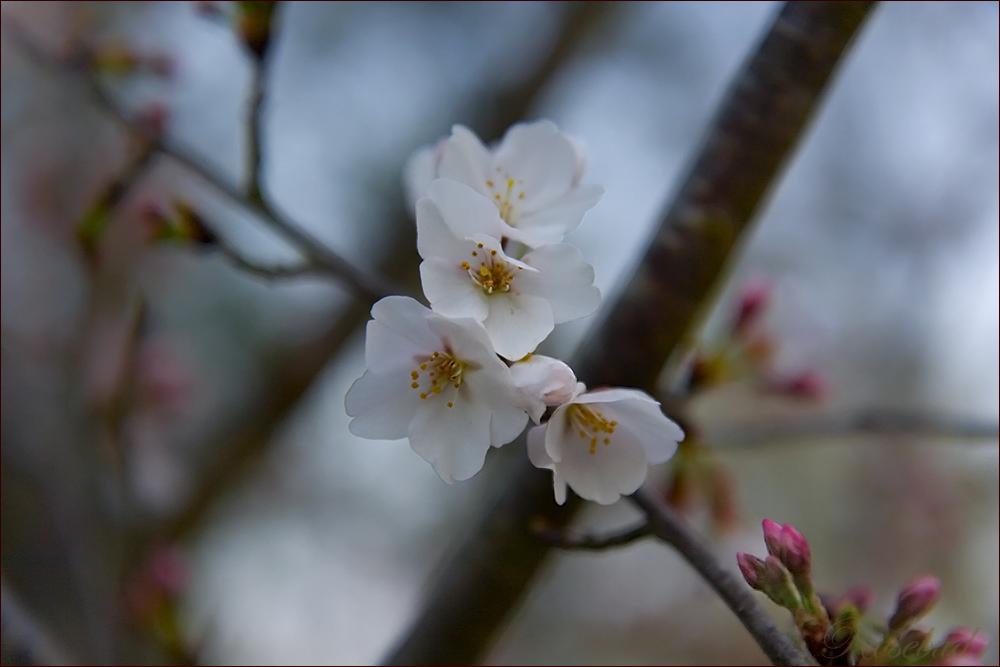
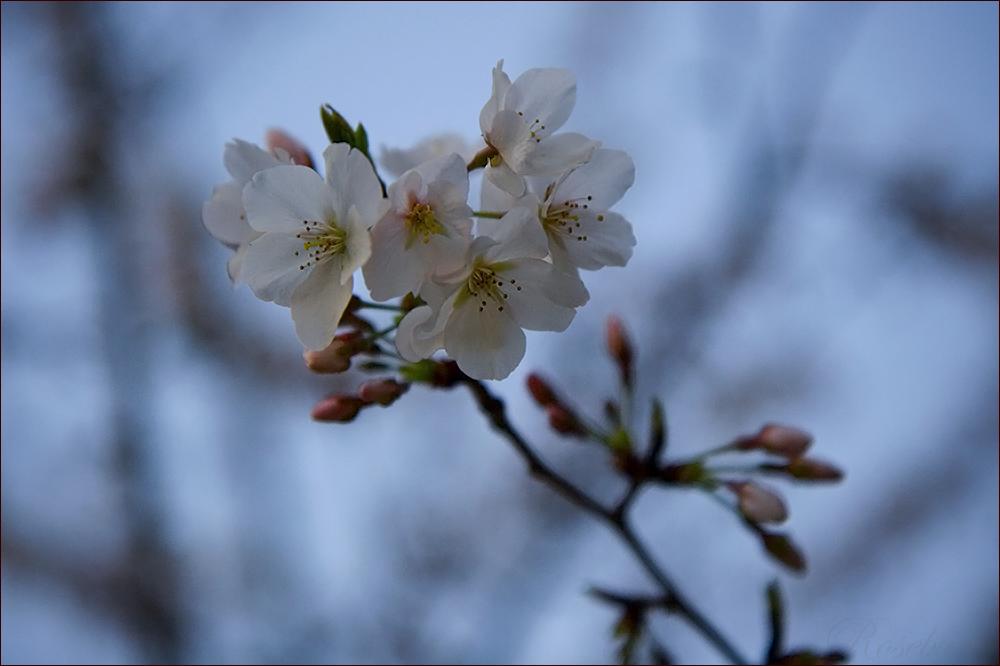
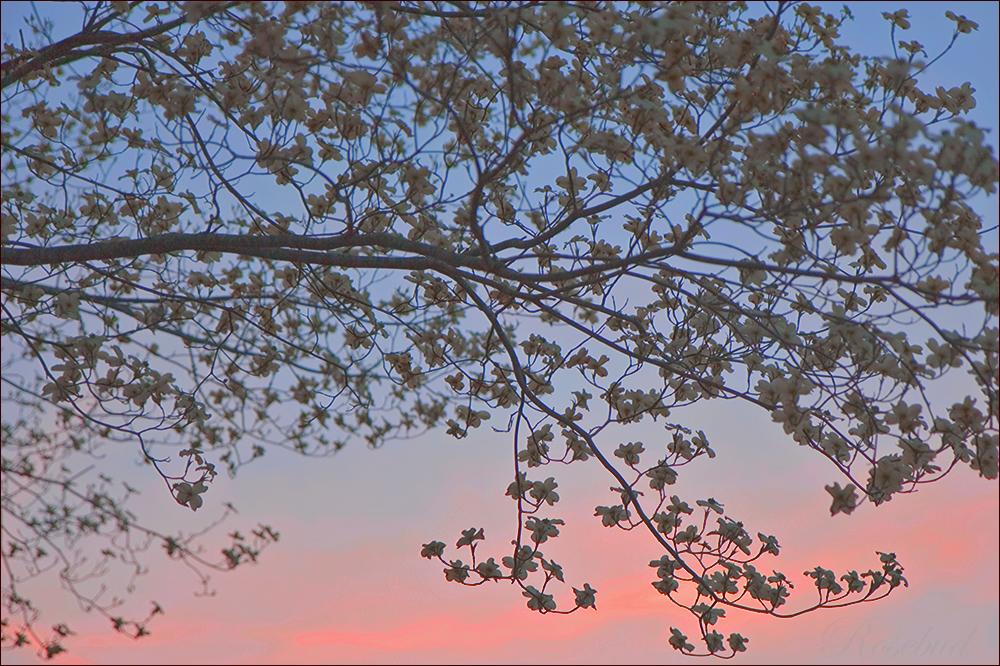
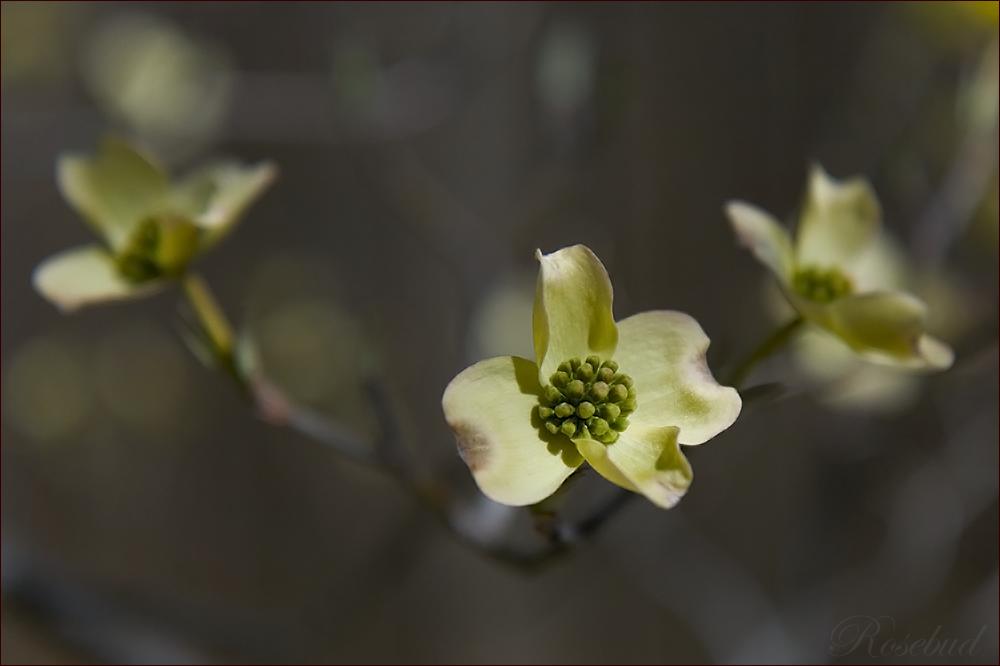
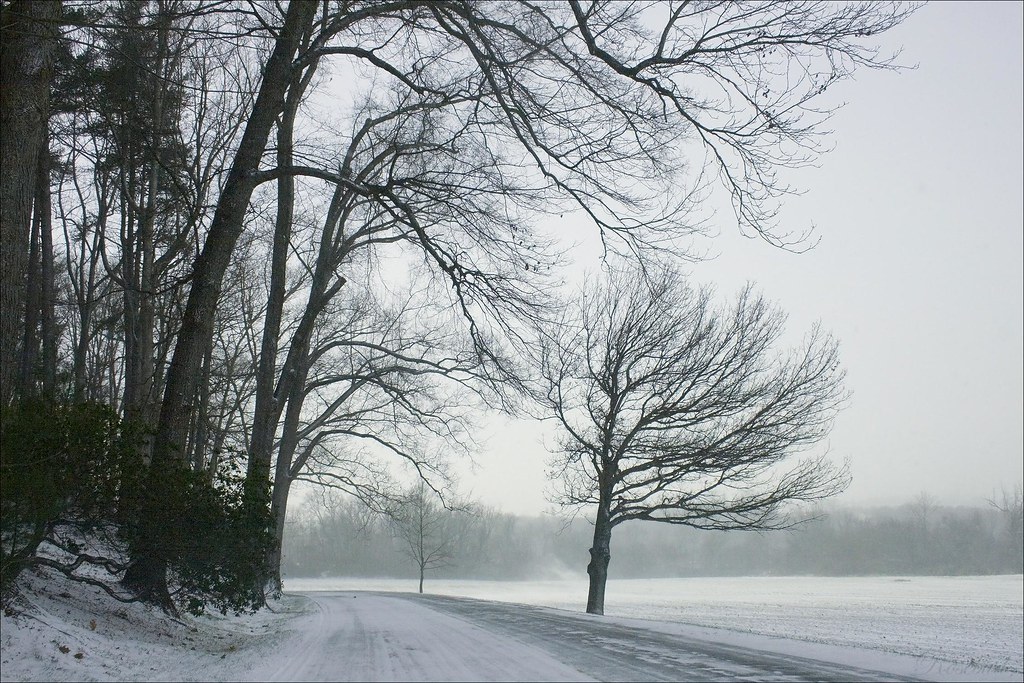
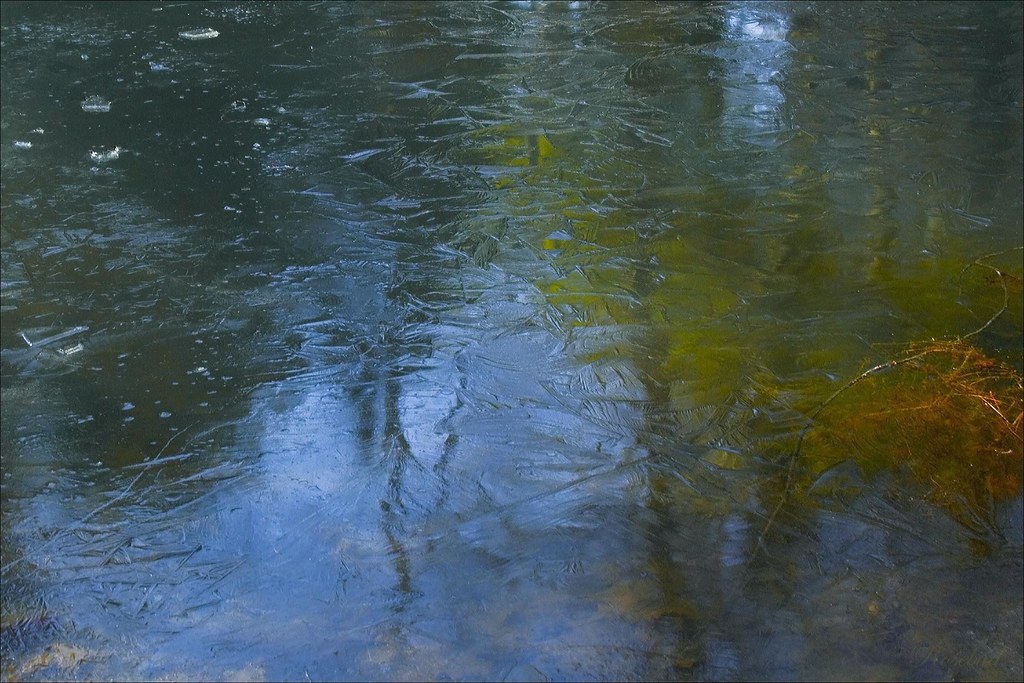
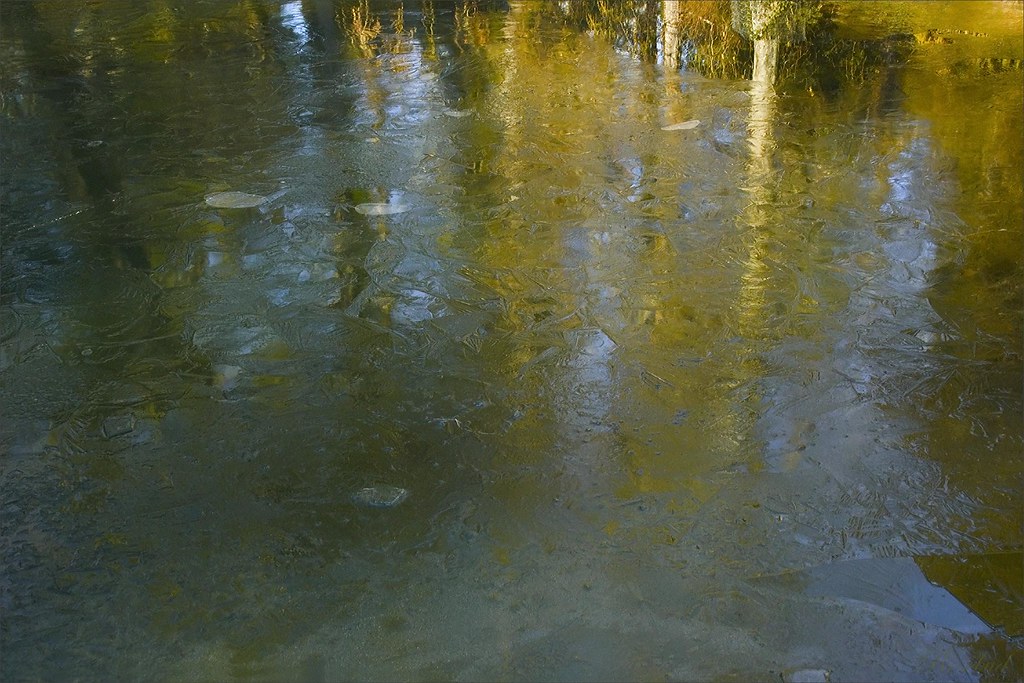
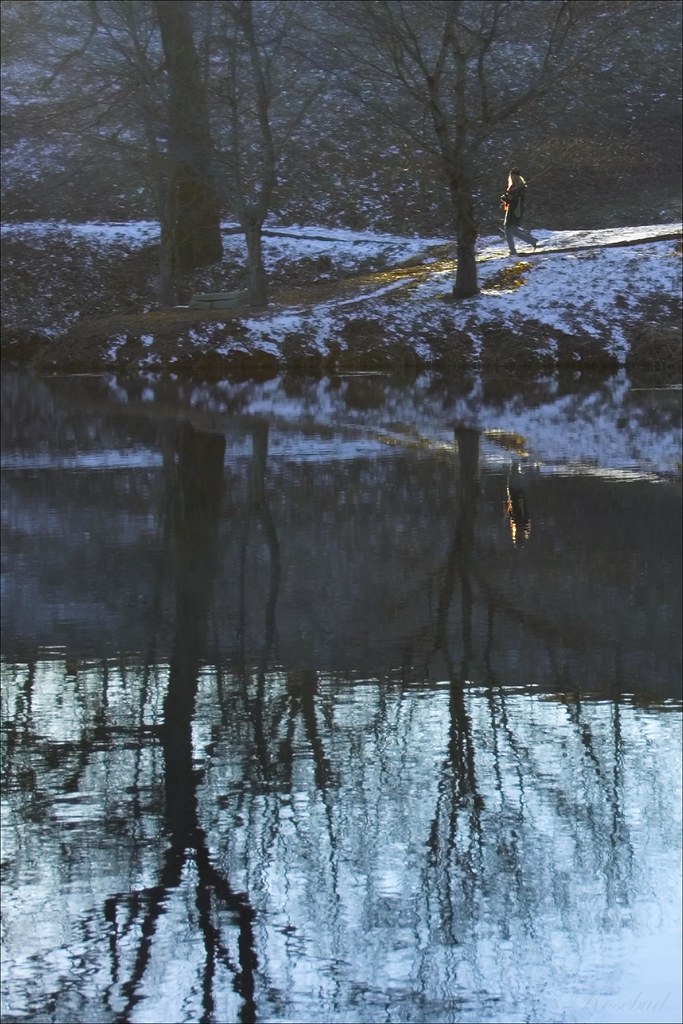
Friday, May 2


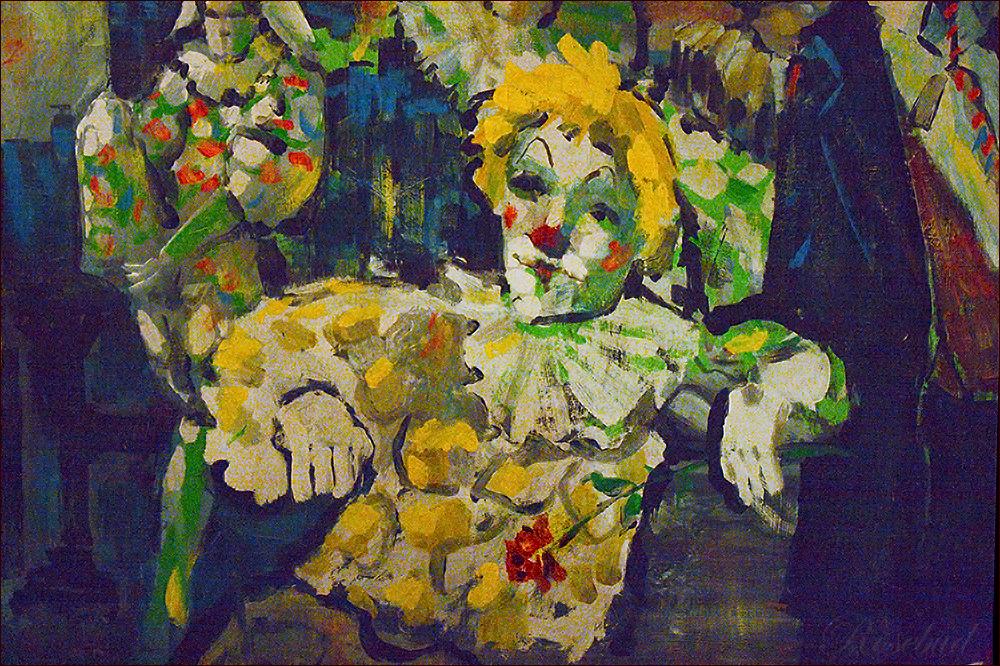
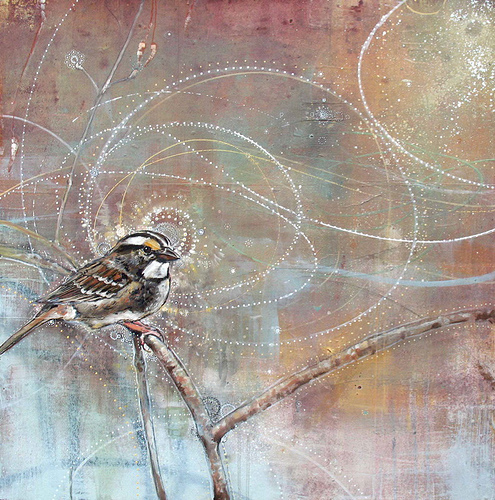
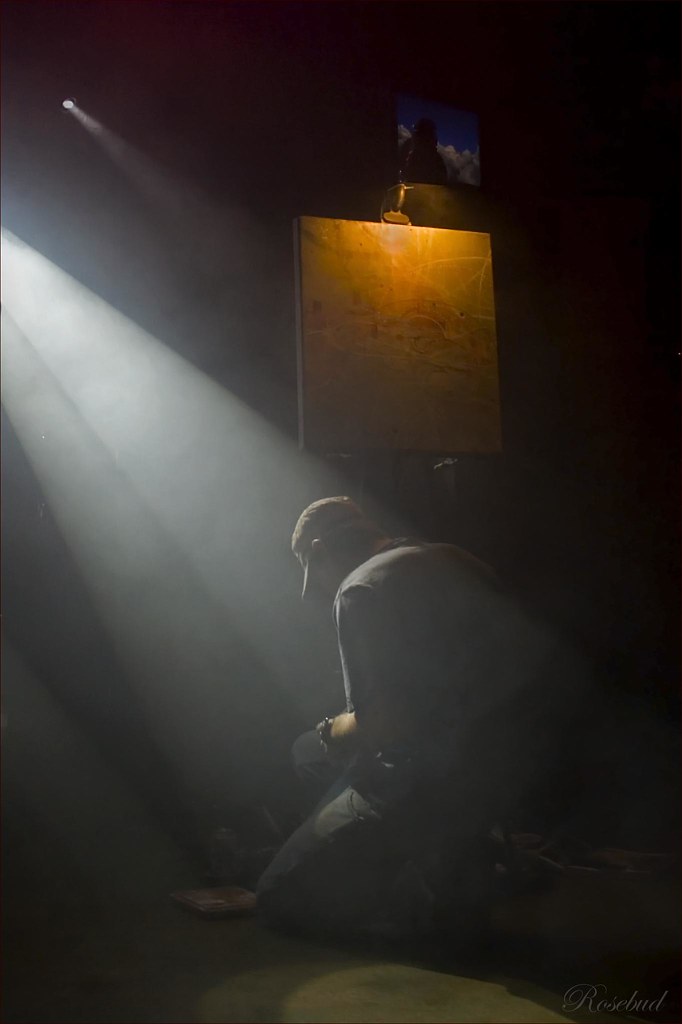
Il Camion (The Truck) by Albert Alcalay

You paint and paint and paint, and eventually there comes a time when the painting looks back at you and says, "Hey, this is you!"

-- Albert Alcalay (1917-2008), quoted in Harvard Gazette

Albert Alcalay at Kantar Fine Arts

obituary

Thursday, May 1

untitled

©2008 RosebudPenfold

Wednesday, April 30

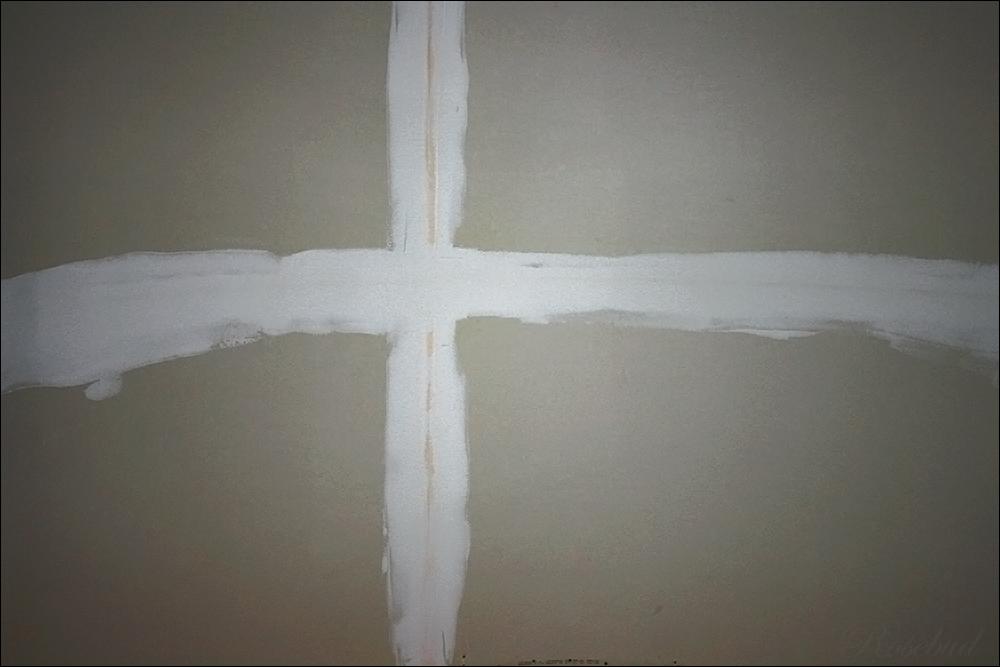
drywall

drywall ©2008 RosebudPenfold

Tuesday, April 29

a mere quintessence

And what is beauty? a mere quintessence,
Whose life is not in being, but in seeming;
And therefore is not to all eyes the same,
But like a cozening picture, which one way
Shows like a crow, another like a swan;
And upon what ground is this beauty drawn?

-- George Chapman All Fools 1605

The Works of George Chapman

Monday, April 28

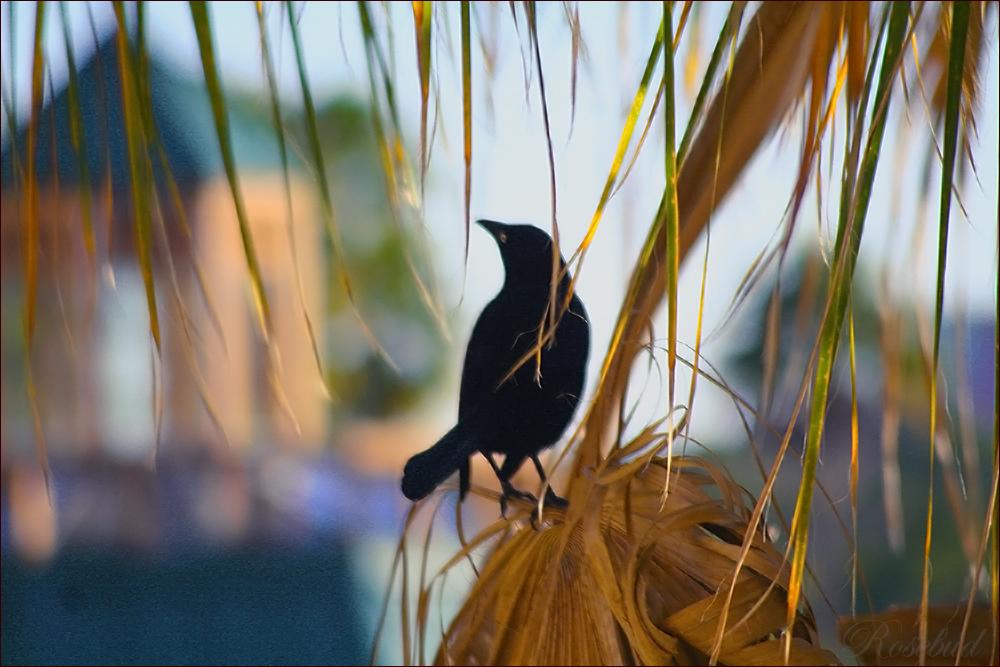
blackbird

blackbird ©2008 RosebudPenfold

indeterminacy

When the colored thing is something whose color appearance changes as the quality of the daylight changes, e.g. the sea, there may be no simple answer to questions which seek to pinpoint the real color. Is the sea really green or grey or blue? Or greenish-blue or bluish-grey or grayish-bluish-green? Again we should not be too perturbed by indeterminacy.

-- Mark Johnston "How to Speak of the Colors" Readings on Color ed. Alex Byrne and David R. Hilbert

Thursday, April 24

untitled (water iris)

untitled (water iris) ©2008 RosebudPenfold

simultaneity

That's the unique miracle of music: that it enables us to perceive This and That simultaneously.

-- Leonard Bernstein The Unanswered Question

Wednesday, April 23

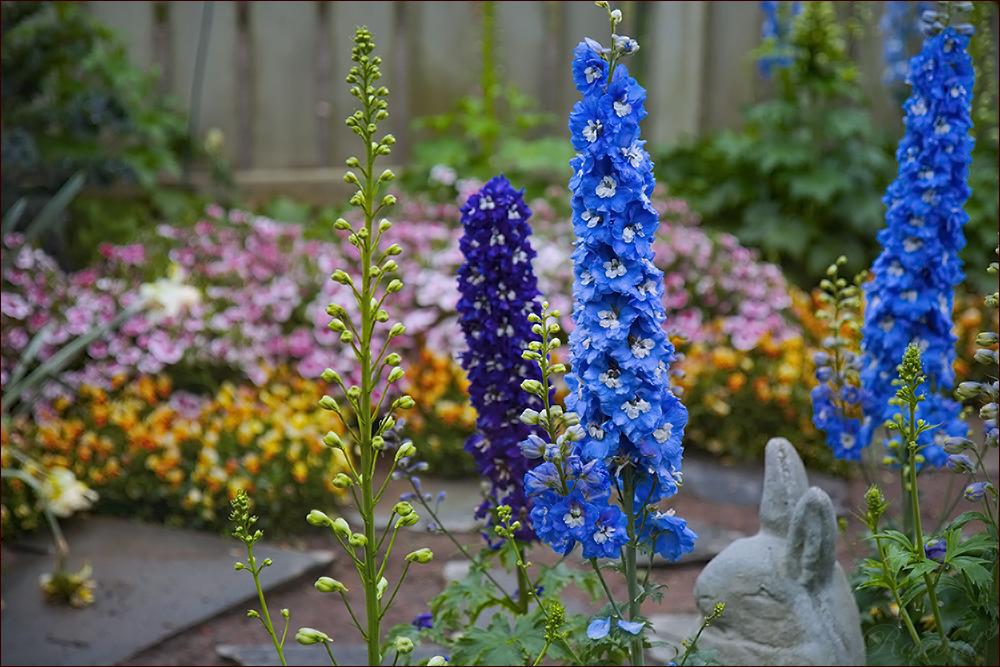
untitled (delphinium)

untitled (delphinium) ©2008 RosebudPenfold

the pool of tears

As she said this, she looked down at her hands, and was surprised to see that she had put on one of the Rabbit's little white kid gloves while she was talking. "How can I have done that?" she thought. "I must be growing small again." She got up and went to the table to measure herself by it, and found that, as nearly as she could guess, she was now about two feet high, and was going on shrinking rapidly: she soon found out that the cause of this was the fan she was holding, and she dropped it hastily, just in time to save herself from shrinking away altogether.

"That was a narrow escape!" said Alice, a good deal frightened at the sudden change, but very glad to find herself still in existence; "and now for the garden!" and she ran with all speed back to the little door: but alas! the little door was shut again, and the little golden key was lying on the glass table as before, "and things are worse than ever," thought the poor child, "for I never was so small as this before, never! And I declare it's too bad, that it is!"

As she said these words her foot slipped, and in another moment, splash! she was up to her chin in salt water. Her first idea was that she had somehow fallen into the sea, "and in that case I can go back by railway," she said to herself. (Alice had been to the seaside once in her life, and had come to the general conclusion, that wherever you go to on the English coast you find a number of bathing machines in the sea, some children digging in the sand with wooden spades, then a row of lodging houses, and behind them a railway station.) However she soon made out that she was in the pool of tears which she had wept when she was nine feet high.

"I wish I hadn't cried so much!" said Alice, as she swam about, trying to find her way out. "I shall be punished for it now, I suppose, by being drowned in my own tears! That will be a queer thing, to be sure! however, everything is queer to-day."

Just then she heard something splashing about in the pool a little way off, and she swam nearer to make out what it was: at first she thought it must be a walrus or hippopotamus, but then she remembered how small she was now, and she soon made out that it was only a mouse, that had slipped in like herself.

"Would it be of any use, now," thought Alice, "to speak to this mouse? Everything is so out-of-the-way down here, that I should think very likely it can talk: at any rate there's no harm in trying." So she began: "O Mouse, do you know the way out of this pool? I am very tired of swimming about here, O Mouse!" (Alice thought this must be the right way of speaking to a mouse: she had never done such a thing before, but she remembered having seen in her brother's Latin Grammar, "A mouse—of a mouse—to a mouse—a mouse—O mouse!") The mouse looked at her rather inquisitively, and seemed to her to wink with one of its little eyes, but it said nothing.

"Perhaps it doesn't understand English," thought Alice. "I daresay it's a French mouse, come over with William the Conquerer." (For, with all her knowledge of history, Alice had no very clear notion how long ago anything had happened.) So she began again: "Ou est ma chatte?" which was the first sentence in her French lesson-book. The Mouse gave a sudden leap out of the water, and seemed to quiver all over with fright. "Oh, I beg your pardon!" cried Alice hastily, afraid that she had hurt the poor animal's feelings. "I quite forgot you didn't like cats."

"Not like cats!" cried the Mouse, in a shrill, passionate voice. "Would you like cats if you were me?"

...It was high time to go, for the pool was getting quite crowded with the birds and animals that had fallen into it: there was a Duck and a Dodo, a Lory and an Eaglet, and several other curious creatures. Alice led the way, and the whole party swam to the shore.

-- Lewis Carroll Alice's Adventures in Wonderland

Tuesday, April 22

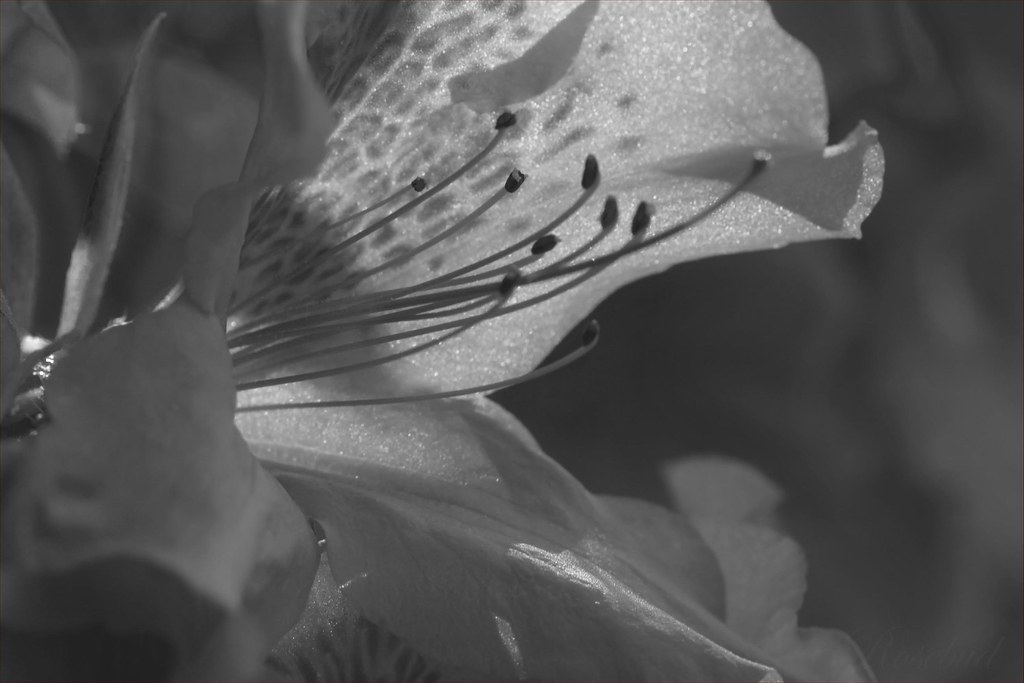
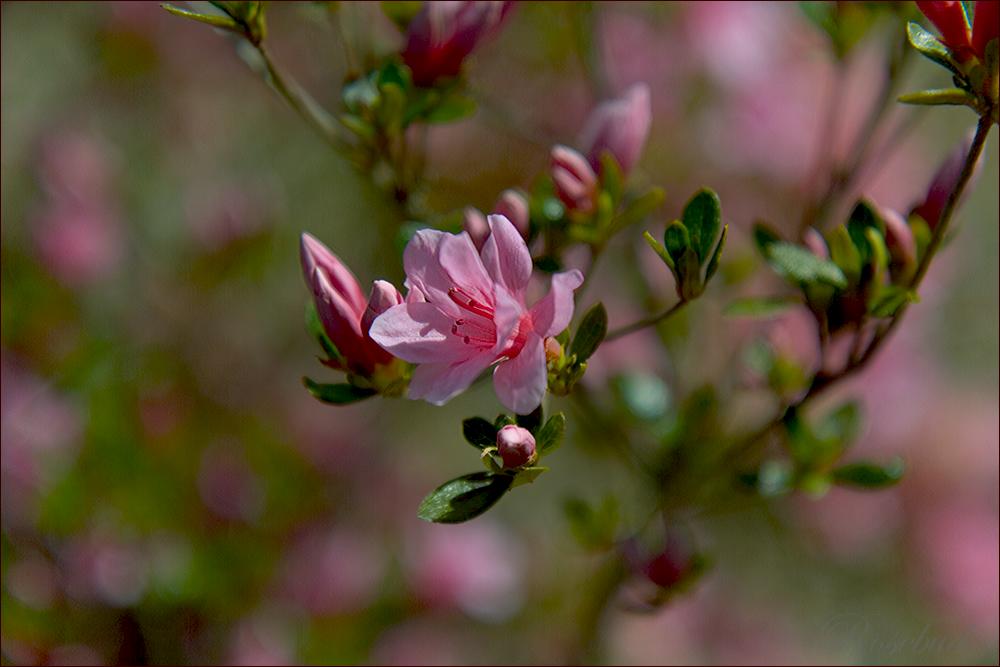
untitled (azalea)

untitled (azalea) ©2008 RosebudPenfold

Saturday, April 19

invention

You see, I think Mussorgsky was accurate in his observation and wrong in his concept: I think his observation that Mendelssohn was a strait-laced man who liked nice, tidy sixteen-bar paragraphs was quite correct. What he forgot to notice was that Mendelssohn was inventive on another level altogether. In order to comprehend his invention, one has to first accept that placidity that is the most abundant feature of his music. Having accepted that, Mendelssohn can then surprise you by the gentlest movement; he needs only the tiniest change, as they say in the jazz field, to make his effect felt. Whereas in the case of Mussorgsky, he has to hit you over the head with a forte-piano contrast, or a quasi-modal moment or something—I happen to like Mussorgsky, by the way, I really do. He wasn't very competent technically, of course, but then neither were the Beatles. However I think that the point was indicative of a misunderstanding—and this wouldn't apply just to composers—that has always muddied the waters for artists who assume that invention has something to do with the noise you make while breaking rules. Needless to say, I don't think it does. I think it has to do with the subtlety with which you adhere to premises somewhat different from those that may be expected of you.

-- Glenn Gould, in Conversations With Glenn Gould by Jonathan Cott

Friday, April 18

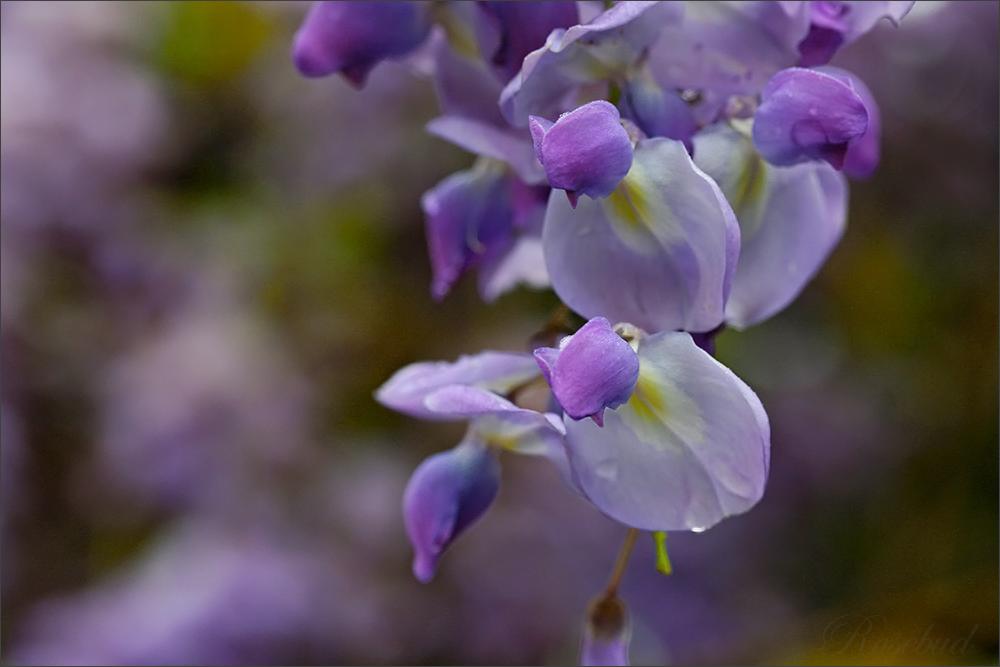
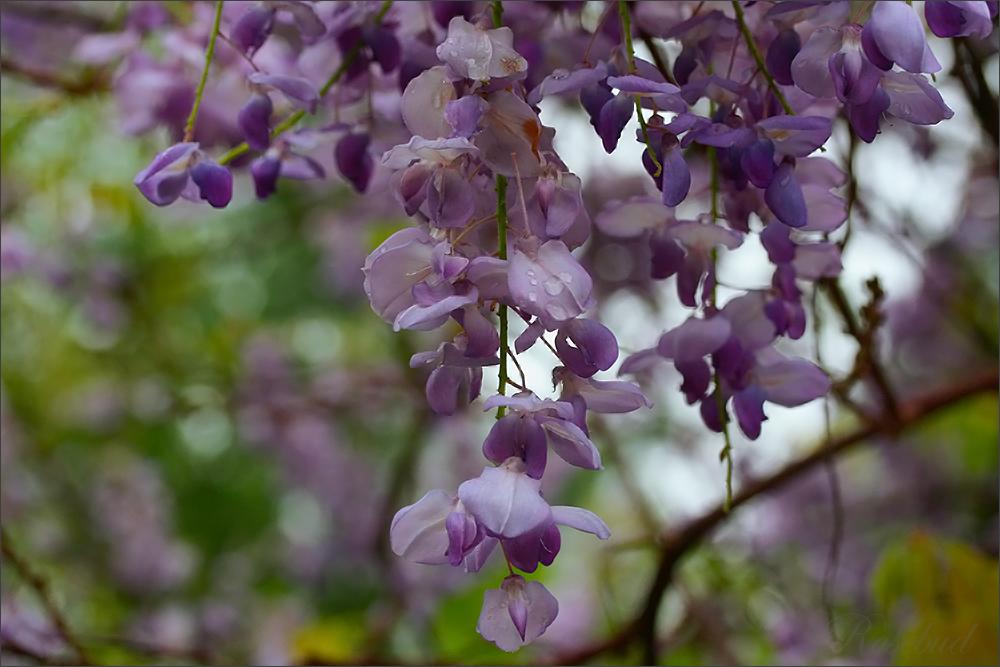
untitled (wisteria)

untitled (wisteria) ©2008 RosebudPenfold

a note springs forth

And here is a magic whose fragrances liberate the initiated hero's soul from all the bonds accumulated by reason. It ransacks reason and inertia, to leave in its place, in his heart, nothing besides Love.

An abyss thousands of years deep engulfs all visible materiality in the impalpable realm of sound; it heaves up the immortal spirit, only to plunge it into a fatality of delight.

Now an invincible element, he approaches the meadows of dream, the ladders of incense, the glades of the Western constellations, the blessed fields of beans in flower, in the dew of the world's first dawnings. He is on the peaks. He is in the empire of ecstasy. All is clear: the Idea is diamantine.

Before the eyes of his spirit, the hieroglyphic alphabet of the Intelligible World scintillates in scattered stars against the crystal horizons. The fragrances of music are columns of magic smoke. A young lake of perfumes, blossoming with water-lilies, rises out of the subterranean night and becomes for him the whole sea.

And here a note springs forth in purity from the invisible sources of the land of life. It is the fountain of the Infinite. It is a new language. Like the light, it is the daughter of the breath which gave it birth.

But leaning close to him appeared the face of the "Beloved": a divine being, having in herself the gifts of expression and of silence—even more expressive by silences than by tones or accents, more lively in rhythms and syncopations than in ornaments and grace-notes, more moving by subtle modes than by sheer power...

And he himself...now holds in his right hand the key of power and of happiness. By the irresistible force, rightly directed, of the harmonies of sound—that is to say, of the electronic rhythm which, as modern science puts it, ensures with a perpetual movement the cohesion of molecules in all bodies, in animal, vegetable, and mineral life—he can flatten the menace of Jericho's impregnable walls, or raise serenely, like Amphion with the sound of his lyre, the walls of Thebes whose stones came and placed themselves in rhythm and in meter, one on top of the other.

-- Joseph-Charles-Victor Mardrus La Toute-Puissance de l'Adepte
Quoted by Joscelyn Godwin in The Mystery of the Seven Vowels

Thursday, April 17

Wednesday, April 16

where there is no trail

Do not be an embodiment of fame; do not be a storehouse of schemes; do not be an undertaker of projects; do not be a proprietor of wisdom. Wander where there is no trail. Hold on to all that you have received from Heaven but do not think you have gotten anything. Be empty, that is all. The Perfect man uses his mind like a mirror - going after nothing, welcoming nothing, responding but not storing.

-- Chuang-Tzu

via Franklin Einspruch

Sunday, April 13

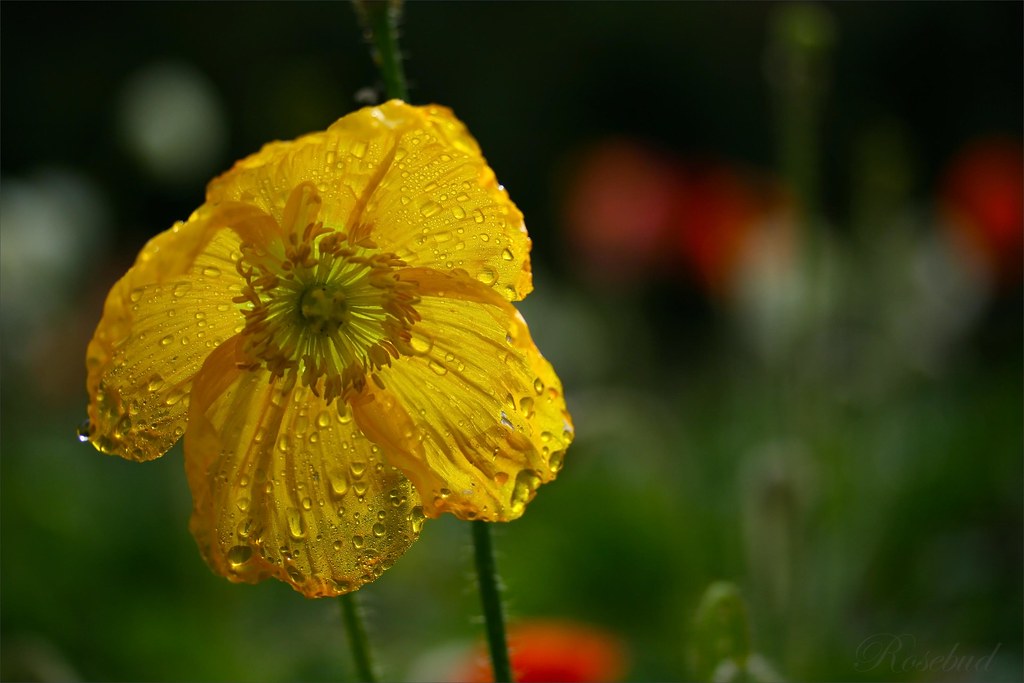
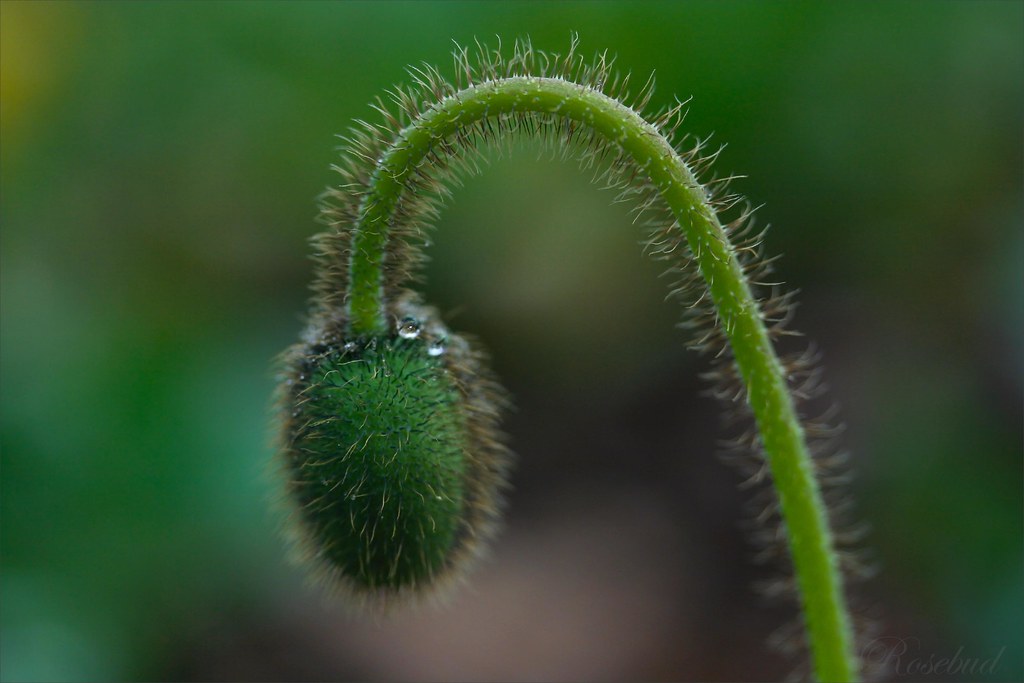
poppy 2

poppy 2 ©2008 RosebudPenfold

impenetrable puzzlement

More than for any other writer, Shakespeare's words stand separate from his life. This was a man so good at disguising his feelings that we can't ever be sure that he had any. We know that Shakespeare used words to powerful effect, and we may reasonably presume that he had feelings. What we don't know, and can barely even guess at, is where the two intersected.

-- Bill Bryson Shakespeare: The World As Stage
Quoted by Terry Teachout here

Saturday, April 12

poppy 1

poppy 1 ©2008 RosebudPenfold

my heart

Like a drop of water is my heart
Laid upon her soft and rosy palm,
Turned whichever way her hand doth turn,
Trembling in an ecstasy of calm.

Like a broken rose-leaf is my heart,
Held within her close and burning clasp,
Breathing only dying sweetness out,
Withering beneath the fatal grasp.

Like a vapoury cloudlet is my heart,
Growing into beauty near the sun,
Gaining rainbow hues in her embrace,
Melting into tears when it is done.

Like mine own dear harp is this my heart,
Dumb, without the hand that sweeps its strings;
Though the hand be careless or be cruel,
When it comes, my heart breaks forth and sings.

-- Sarah Williams, from "Youth and Maidenhood"

Twilight Hours, a Legacy of Verse by Sarah Williams

Friday, April 11

untitled

untitled ©2008 RosebudPenfold

distance

The artist in particular has always been someone who had to get away in order to understand what he was part of. One must leave town, says Nietzsche, to see how high its towers are. (Remember Wordsworth's rowboat, in The Prelude: it had to carry him away a distance before he saw the dimensions of the crag he'd been anchored under.)

But Nietzsche's Zarathustra grows lonely, and contemplates returning from self-imposed exile into the human community. (It is ourselves we humans are farthest away from, Nietzsche will write elsewhere.) And it is apparent that, while the seer may be solitary, the sayer requires an audience. This double impulse, both to and from others, drives—and divides—writing as it does writers. Not only do we have the feeling that every man is an island. But also, since Heidegger, an extra loneliness arises: even when we find conversant company, we come to entertain a modern suspicion: that language is the only one doing the talking.

-- Heather McHugh Broken English: Poetry and Partiality

Heather McHugh

Thursday, April 10

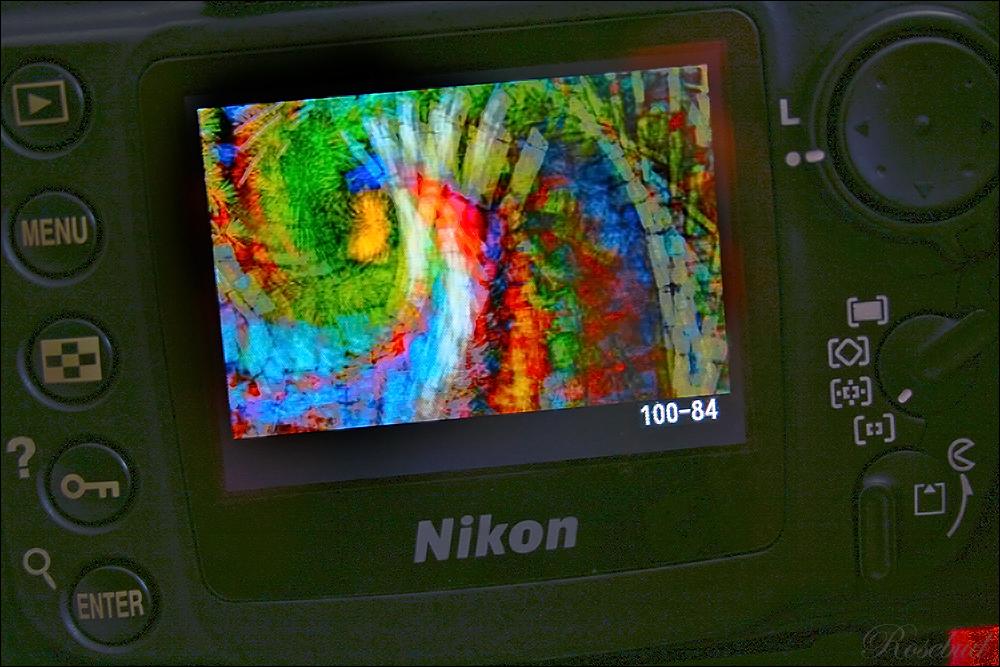
untitled (nikon)

untitled (nikon) ©2008 RosebudPenfold

*

I think also finally
Of the silk-noise, solitary, subtle
Of a fire creating a whole room
By a self-devouring.
It speaks to itself.
Or, almost for its own sake,
It speaks to me.

-- Paul Valéry
Translated by Hilary Corke

(Quoted by Heather McHugh in Broken English: Poetry and Partiality)

Wednesday, April 9

untitled (pink azalea)

untitled (pink azalea) ©2008 RosebudPenfold

a shared understanding

"The rest I leave to silence," says the watchman at the outset of Aeschylus's Agamemnon. And then he adds, in a translation English audiences might take to be directed at the very presence of an audience: "The house itself, could it take voice, might speak aloud and plain. I speak to those who understand, but if they fail, I have forgotten everything."

What paradoxes of time arise here! If the listeners (in that watchman's future) will not understand, then he (the one whose job it is to pass on signs) has already forgotten what he knew. This seems an odd forgetting, a consequence of something that happens after it—a forgetting caused not by the forgetter's incapacity but by an incapacity in potential co-rememberers. It argues, by implication, for an odd kind of memory—a memory contingent on its seconding in others, cognition needing recognition, according needing recording. Such memory is collective memory, contingent on comparison, confirmation, consensuality—something prefixed with a with. The co-knower, the receiver, is needed to keep the signaller's art and meaning from atrophy.

The memory the watchman speaks of, then, is not only contingent (on his speaking being heard and understood, a theme which will arise again and again in this play) but also expedient. For a shared understanding is a less dangerous one, and some threats make forgetting safer, for the understander who must otherwise stand it all alone...

The watchman is speaking about the perennial condition of art (the muses' mother was Mnemosyne, memory). If we don't participate with the watchman, with the reader and conveyer of signs, he will forget the art of relaying, relating: and he will forget for all of us.

-- Heather McHugh Broken English: Poetry and Partiality

Sunday, April 6

the pearl

the pearl ©2008 RosebudPenfold

tumbling to earth

In the beginning
light split like a plaything
of little winged rainbows
and I sought
something to bring it
together again.

-- Stuart Henson, from "Newton's Notebook (1667)"

Stuart Henson's "Tryst"

Saturday, April 5

dreams from the x-ray cafe 2 (the rose)

dreams from the x-ray cafe 2 (the rose) ©2008 RosebudPenfold

A series for Paul Thomas

Because I seek an image

Hic. On the grey sand beside the shallow stream
Under your old wind-beaten tower, where still
A lamp burns on beside the open book
That Michael Robartes left, you walk in the moon
And though you have passed the best of life still trace
Enthralled by the unconquerable delusion
Magical shapes.

Ille. By the help of an image
I call to my own opposite, summon all
That I have handled least, least looked upon.

Hic. And I would find myself and not an image.

Ille. That is our modern hope and by its light
We have lit upon the gentle, sensitive mind
And lost the old nonchalance of the hand;
Whether we have chosen chisel, pen or brush
We are but critics, or but half create...

Hic. Why should you leave the lamp
Burning alone beside an open book
And trace these characters upon the sands;
A style is found by sedentary toil
And by the imitation of great masters.

Ille. Because I seek an image, not a book.
Those men that in their writings are most wise
Own nothing but their blind, stupefied hearts.
I call to the mysterious one who yet
Shall walk the wet sands by the edge of the stream
And look most like me, being indeed my double,
And prove of all imaginable things
The most unlike, being my anti-self,
And standing by these characters disclose
All that I seek; and whisper it as though
He were afraid the birds, who cry aloud
Their momentary cries before it is dawn,
Would carry it away to blasphemous men.

-- William Butler Yeats, lines from "Ego Dominus Tuus"

I think that all happiness depends on the energy to assume the mask of some other self; that all joyous or creative life is a re-birth as something not oneself, something which has no memory and is created in a moment and perpetually renewed. We put on a grotesque or solemn painted face to hide us from the terrors of judgment, invent an imaginative Saturnalia where one forgets reality, a game like that of a child, where one loses the infinite pain of self-realization. Perhaps all the sins and energies of the world are but its flight from an infinite blinding beam.

-- William Butler Yeats Per Amica Silentia Lunae

Michael Robartes and the Dancer

Ego Dominus Tuus

Friday, April 4

lindsey

lindsey ©2008 RosebudPenfold

Entrance From Sleep

To wake into the afternoon for you
Is a familiar gesture. Upon the eye,
As dawn to the shade-embroidered fountain brings
The young fern's wisdom, the first world takes shape
Where shadow and light on a white ceiling meet;
And the late garden builds its trellises
And the machinery of light begins.

To wake is to become what one first sees.
So, waking upon beaches, one is a shell,
A tide; or, afternoons in an apartment
Above a garden, levels of shade and sun
Through which you wade like eyes in tapestries
That wake only when struck by light and take
Advantage of this grace to change our sleep

Or plant an image of our wakening.
So you, with a Medici smile, becoming not
A twilight personage but the danceable gloom
And music of all shade, wake trailing song
As in an hour of hot brilliance what
Happens is a wrung memory of light
And all shade is what music we have rung.

-- James Merrill

James Merrill

Thursday, April 3

untitled (cherry)

untitled (cherry) ©2008 RosebudPenfold

a whole life

He fell to thinking, among other things, about his epileptic condition, that there was a stage in it just before the fit itself (if the fit occurred while he was awake), when suddenly, amidst the sadness, the darkness of soul, the pressure, his brain would momentarily catch fire, as it were, and all his life's forces would be strained at once in an extraordinary impulse. The sense of life, of self-awareness, increased nearly tenfold in these moments, which flashed by like lightning. His mind, his heart were lit up with an extraordinary light; all his agitation, all his doubts, all his worries were as if placated at once, resolved in a sort of sublime tranquility, filled with serene, harmonious joy, and hope, filled with reason and ultimate cause. But these moments, these glimpses were still only a presentiment of that ultimate second (never more than a second) from which the fit itself began. That second was, of course, unbearable. Reflecting on that moment afterwards, in a healthy state, he had often said to himself that all those flashes and glimpses of a higher self-sense and self-awareness, and therefore of the "highest being," were nothing but an illness, a violation of the normal state, and if so, then this was not the highest being at all but, on the contrary, should be counted as the very lowest. And yet he finally arrived at an extremely paradoxical conclusion: "So what if it is an illness?" he finally decided. "Who cares that it's an abnormal strain, if the result itself, if the moment of the sensation, remembered and examined in a healthy state, turns out to be the highest degree of harmony, beauty, gives a hitherto unheard-of and unknown feeling of fullness, measure, reconciliation, and an ecstatic, prayerful merging with the highest synthesis of life?" These vague expressions seemed quite comprehensible to him, though still too weak. That it was indeed "beauty and prayer," that it was indeed "the highest synthesis of life," he could not doubt, nor could he admit of any doubts. Was he dreaming some sort of abnormal and nonexistent visions at that moment, as from hashish, opium, or wine, which humiliate the reason and distort the soul? He could reason about it sensibly once his morbid state was over. Those moments were precisely only an extraordinary intensification of self-awareness—it there was a need to express this condition in a single word—self-awareness and at the same time a self-sense immediate in the highest degree. If in that second, that is, in the very last conscious moment before the fit, he had happened to succeed in saying clearly and consciously to himself: "Yes, for this moment one could give one's whole life!"—then surely this moment in itself was worth a whole life. However, he did not insist on the dialectical part of his reasoning: dullness, darkness of soul, idiocy stood before him as the clear consequences of these "highest moments." Naturally, he was not about to argue in earnest. His reasoning, that is, his evaluation of this moment, undoubtedly contained an error, but all the same he was somewhat perplexed by the actuality of the sensation. What, in fact, was he to do with this actuality? Because it had happened, he had succeeded in saying to himself in that very second, that this second, in its boundless happiness, which he fully experienced, might perhaps be worth his whole life. "At that moment," as he had once said to Rogozhin in Moscow, when they got together there, "at that moment I was somehow able to understand the extraordinary phrase that time shall be no more. Probably," he had added, smiling, "it's the same second in which the jug of water overturned by the epileptic Muhammad did not have time to spill, while he had time during the same second to survey all the dwellings of Allah."

-- Fyodor Dostoevsky The Idiot
Translated by Richard Pevear and Larissa Volokhonsky

Wednesday, April 2

untitled (cherry)

untitled (cherry) ©2008 RosebudPenfold

now and then

Pasternak considered that "when any man dies there remains some of that undying subjectivity which was part of him when alive and which constitutes his contribution to human existence." He believed that this deathless subjectivity, which is separate from the individual, "this patch, this fragment of the universal soul common to all mankind, represents a timeless cycle of action and is the principal matter of art." In other words, "while the artist, like everyone else, is mortal, the joy of existence that he experiences is deathless and, with some approximation of his personal and immediate experience, can be experienced by others centuries later through his works." Pasternak spoke in a letter to Rilke about the poet "who is himself always the essence of poetry, called though he may be by different names at different times."

The four lines of poetry Rilke wrote on the flyleaf of the copy of the Duino Elegies he presented to Tsvetayeva at Pasternak's request may be seen as a paraphrase of these words:

We touch each other. How? With wings that beat,
With very distance touch each other's ken.
One poet only lives, and now and then
Who bore him, and who bears him now, will meet.

-- Yevgeny Pasternak, Yelena Pasternak, and Konstantin M. Azadovsky (eds.), in the introduction to Letters: Summer 1926 by Boris Pasternak, Marina Tsvetayeva, and Rainer Maria Rilke

Translated by Margaret Wettlin, Walter Arndt, and Jamey Gambrell

Monday, March 31

untitled (cherry)

untitled (cherry) ©2008 RosebudPenfold

the capacity to be overwhelmed

The beauty that is human, and the beauty that is made (art)—both raise the fantasy of possession. Our model of the disinterested comes from the beauty of nature—a nature that is distant, overarching, unpossessable.

From a letter written by a German soldier standing guard in the Russian winter in late December 1942:

The most beautiful Christmas I had ever seen, made entirely of disinterested emotion and stripped of all tawdry trimmings. I was all alone beneath an enormous starred sky, and I can remember a tear running down my frozen cheek, a tear neither of pain nor of joy but of emotion created by intense experience.

Unlike beauty, often fragile and impermanent, the capacity to be overwhelmed by the beautiful is astonishingly sturdy and survives amidst the harshest distractions. Even war, even the prospect of certain death, cannot expunge it.

-- Susan Sontag "An Argument About Beauty" At the Same Time

Friday, March 28

rosy dawn

rosy dawn ©2008 RosebudPenfold

the dance

We get still farther away from the fundamental facts about speech when we think of it as something that can be written and read, forgetting that what writing, in our clumsy notations, can represent is only a small part of the spoken sound, where pitch and stress, tempo and rhythm, are almost entirely ignored. But even a writer or reader, unless the words are to fall flat and meaningless, must speak them soundlessly to himself. The written or printed book is only a series of hints, as elliptical as the neumes of Byzantine music, from which the reader thus works out for himself the speech-gestures which alone have the gift of expression.

All the different kinds of language have a relation of this kind to bodily gesture. The art of painting is intimately bound up with the expressiveness of the gestures made by the hand in drawing, and of the imaginary gestures through which a spectator of a painting appreciates its 'tactile values'. Instrumental music has a similar relation to silent movements of the larynx, gestures of the player's hand, and real or imaginary movements, as of dancing, in the audience. Every kind of language is in this way a specialized form of bodily gesture, and in this sense it may be said that the dance is the mother of all languages.

-- R.G. Collingwood The Principles of Art

Thursday, March 27

untitled (white dogwood)

untitled (white dogwood) ©2008 RosebudPenfold

the play of rope

As retainer of things, rope bestows yet another great gift to a sojourner. Within constancy of change, the knotted rope allows one to keep track of days and moons, miles and immeasurable phenomena of the night sky. If not the invention of rope, the count was preserved by it. Tie a knot for each watering place or each sleep. By the end you know how many stops it takes from Damascus to Jerusalem. Being able to keep a tally is a door to the sacred realm of numbers.

To have a count of numbers means fewer things escape the keep. Unless you know how many sheep, a flock may be slowly devoured by wolves. If the weeks are not tallied, you may miss the propitious time for planting. A new kind of measure is given by numbers, quantity. Important devices follow. A measuring rod is just a knotted rope made rigid. A calendar is its tableau. Fields and highways, lunar eclipses and meteor showers, could now be tracked. The count gives new meaning to the sense of a lawful cosmos. What is lawful can be counted, and all that happens is countable. Thus lawfulness of phenomena is precisely what may be counted on.

The discovery of quantity led to the early sciences of Pythagorus: arithmetic, astronomy, music, and philosophy. Here, the count lies behind the workings of stars, song, and thought. An early flowering of knowledge recognizes the count as mediator between heavenly precision (perfect differentiation of strands) and earthly inexactitude (blurred boundaries, overlap, and tangled threads.) A thing's essence, its number, determines its hidden place in reality. Proper study of number, however, enables one "to disregard the eyes and other senses and go on to being itself in company with truth" (Republic 7.537d). To seize a counting rope leads to liberation from murky appearances...

A weaver's rope holds a strategy. Therein lies its beauty, one strand placed over another and drawn under a third, carefully over and over again. A strategy is a way and a map—what Ariadne hands Theseus before he enters the labyrinth. She offers a ball of thread, a rope, she has woven. The underground maze is a tangle of blind alleys, dead ends, pitfalls, and quagmires. It is the life inside himself that he is to penetrate. At its center lives a monster, the Minotaur, half man, half bull, that demands sacrifices to its grotesque appetite. To succeed is to keep track of his journey. Ariadne's thread is guide to Theseus's heroic quest and midwife to his own birth. It is an example of rope's power to unriddle the self.

To every rope is assigned a length. The length—to which corresponds the life of each thing—has been cut from a single unbroken string, the proto-rope, that comprises the manifest universe. So modern physics, with its "string theory" of reality, concurs with ancient thought. The length of a tree's time is a few score years; a moth's, a few hours. For each being, rope stretches only so far. What happens then, at breath's last breath, turns on an understanding gained during the full length of breathing. Total dissolution, nothingness, or continuation in some form or formlessness—it depends on the fidelity with which one has sought one's place and accepted an infinitude of other places...

The ancients tell that lifelines were prepared by the three Fates, braiders of rope. Clotho spins the flax, Atropos twists it into thread, and with her shears, Lachesis snips it at the measured length. They are tireless and never sleep. Their intelligence, finer than the gods', knows the points of the rope's natural divisions. A vast netting of all things, knotted at the joints, forever guides their hands as they cut rope for each place. The net is an image, a luminous energy. It is Indira's net on which hangs all things, past, present, and future. The net alone survives all transformations wrought by the Fates, since it is a template of roping, not rope itself. The Fates themselves also have a lifeline. Like all else, they cannot outlive their day and function. When all rope has been cut to length and the manifest universe ended, spinning wheel and shears dissolve, and they too return to sleep undisturbed by dreams.

Whether the Fates provide material for tragedy, theirs is (as is tragedy) nonetheless a play. "This play was played eternally before all creatures," Eckhart writes. It is pure because, being playful, it desires to secure no particular end, as does a work. Interwoven elements of freeplay—dream, fantasy, apparition, or mirage—move free from any pragmatic, creaturely design.

-- David Appelbaum Everyday Spirits

Everyday Spirits

Monday, March 24

strung

strung ©2008 RosebudPenfold

That Nature is a Heraclitean Fire and of the comfort of the Resurrection

Cloud-puffball, torn tufts, tossed pillows | flaunt forth, then
           chevy on an air-
built thoroughfare: heaven-roysterers, in gay-gangs | they throng;
            they glitter in marches.
Down roughcast, down dazzling whitewash, | wherever an elm
        arches,
Shivelights and shadowtackle in long | lashes lace, lance, and pair.
Delightfully the bright wind boisterous | ropes, wrestles, beats
        earth bare
Of yestertempest's creases; in pool and rut peel parches
Squandering ooze to squeezed | dough, crust, dust; stanches,
        starches
Squadroned masks and manmarks | treadmire toil there
Footfretted in it. Million-fueled, | nature's bonfire burns on.
But quench her bonniest, dearest | to her, her clearest-selved spark
Man, how fast his firedint, | his mark on mind, is gone!
Both are in an unfathomable, all is in an enormous dark
Drowned. O pity and indig | nation! Manshape, that shone
Sheer off, disseveral, a star, | death blots black out; nor mark
                Is any of him at all so stark
But vastness blurs and time | beats level. Enough! the Resur-
            rection,
A heart's-clarion! Away grief's gasping, | joyless days, dejection.
                Across my foundering deck shone
A beacon, an eternal beam. | Flesh fade, and mortal trash
Fall to the residuary worm; | world's wildfire, leave but ash:
                In a flash, at a trumpet crash,
I am all at once what Christ is, | since he was what I am, and
This Jack, joke, poor potsherd, | patch, matchwood, immortal
           diamond,
                Is immortal diamond.

-- Gerard Manley Hopkins

Project Gutenberg's Poems of Gerard Manley Hopkins

Saturday, March 22

Garden Abstract

The apple on its bough is her desire,—
Shining suspension, mimic of the sun.
The bough has caught her breath up, and her voice,
Dumbly articulate in the slant and rise
Of branch on branch above her, blurs her eyes.
She is prisoner of the tree and its green fingers.

And so she comes to dream herself the tree,
The wind possessing her, weaving her young veins,
Holding her to the sky and its quick blue,
Drowning the fever of her hands in sunlight.
She has no memory, nor fear, nor hope
Beyond the grass and shadows at her feet.

-- Hart Crane

Friday, March 21

red dogwood

red dogwood ©2008 RosebudPenfold

Thursday, March 20

In the Fields

Lord, when I look at lovely things which pass,
         Under old trees the shadows of young leaves
Dancing to please the wind along the grass,
         Or the gold stillness of the August sun on the August sheaves;
Can I believe there is a heavenlier world than this?
         And if there is
Will the strange heart of any everlasting thing
         Bring me these dreams that take my breath away?
They come at evening with the home-flying rooks and the scent of hay,
         Over the fields. They come in Spring.

-- Charlotte Mew

Charlotte Mew

Tuesday, March 18

Friday, March 14

untitled (window)

untitled (window) ©2008 RosebudPenfold

Thursday, March 13

continuum

And what about what was there before?

This is shaped in the new merging, like ancestral smiles, common memories, remembering just how the light stood on the water that time. But it is also something new. Outside, can't you hear it, the traffic, the trees, everything getting nearer. To end up with, inside each other, moving upward like penance. For the continual pilgrimage has not stopped. It is only that you are both moving at the same rate of speed and cannot apprehend the motion.

-- John Ashbery, from "The New Spirit"

Listen to John Ashbery reading an excerpt of "The New Spirit" here (Side Two of The Songs We Know Best)

John Ashbery

Wednesday, March 12

songs, answers, and prayers

song, answers, prayers by David Hale
songs, answers, and prayers by David Hale

David Hale Art

flutter installation (bird works by David Hale)

Photo of David at work on a performance painting here

Tuesday, March 11

vic chesnutt

vic chesnutt ©2008 RosebudPenfold

See Sunny Taylor's oil portrait of Vic Chesnutt here

Of Mere Being

The palm at the end of the mind,
Beyond the last thought, rises
In the bronze distance.

A gold-feathered bird
Sings in the palm, without human meaning,
Without human feeling, a foreign song.

You know then that it is not the reason
That makes us happy or unhappy.
The bird sings. Its feathers shine.

The palm stands on the edge of space.
The wind moves slowly in the branches.
The bird's fire-fangled feathers dangle down.

-- Wallace Stevens

Friday, March 7

the whole and the parts

Nothing exists except in relationship to everything else. Everything exists only in relationship to everything else.

-- Daan Hoekstra "The Artist's Study of Nature and Its Relationship to Goethean Science" Janus Head 10.1

Daan Hoekstra

The Artist's Study of Nature and Its Relationship to Goethean Science (pdf)

Janus Head

Wednesday, March 5

Tuesday, March 4

from translucency to transparency

Chert, flint, agate, and glassy rock can flake to a cutting edge only a few atoms thick. Prehistoric people made long oval knives of this surpassing sharpness, and made them, wittingly, too fragile to use. Some people—Homo sapiens—lived in a sub-freezing open-air camp in central France about eighteen thousand years ago. We call their ambitious culture Solutrean; it lasted only about three thousand years. They invented the bow and arrow, the spear thrower, and the needle—which made clothes such a welcome improvement over draped pelts...

Solutrean artisans knapped astonishing yellow blades in the shape of long, narrow pointed leaves. The longest Solutrean blade is fourteen inches long, four inches at its beam, and only one-quarter inch thick. Most of these blades are the size and thickness of a fillet of sole. Their intricate technique is overshot flaking; it is, according to Douglas Preston, "primarily an intellectual process"...

Hold one of these chert knives to the sky. It passes light. It shines dull, waxy gold—brown in the center, and yellow toward the edges as it clears. At each concoidal fractured edge all the way around the double-ogive form, at each cove in the continental stone, the blade thins from translucency to transparency. You see your skin, and the sky. At its very edge the blade dissolves into the universe at large. It ends imperceptibly at an atom.

Each of these delicate, absurd objects takes hundreds of separate blows to fashion. At each stroke and at each pressure flake, the brittle chert might—and, by the record, very often did—snap. The maker knew he was likely to lose many hours' breath-holding work at a tap. The maker worked in extreme cold. He knew no one would ever use the virtuoso blades. He protected them, and his descendants saved them intact, for their perfection. To any human on earth, the sight of one of them means: someone thought of making, and made, this difficult, impossible, beautiful thing.

-- Annie Dillard For the Time Being

Monday, March 3

panoramas of shifting energy: the sky, the ocean


Nico Muhly: "It Goes Without Saying" from Speaks Volumes, created in Reykjavík and New York City (read liner notes)

He paints the sky with his work. The melody and notes are almost invisible, and he thinks in terms of these panoramas of shifting energy, which at their best are so beautiful.

-- Antony Hegarty of Antony and the Johnsons, on the composer Nico Muhly, quoted by Rebecca Mead in "Eerily Composed: Nico Muhly's sonic magic" at The New Yorker

The piece began with the melancholy song of the electric violin—looped, three-note phrases overlapping, but never precisely matching up, to create disordered sonic patterns, like uncharted stars. Gradually, other instruments joined in, strings and woodwinds picking up the violin’s three-note signature to form clear constellations of sound. As the momentum built, the entire orchestra was shaped into harmony by the resonant, otherworldly violin. Toward the concerto’s conclusion, the violin engaged in a duet with the celesta—an instrument named for its heavenly sound, and much favored by Muhly—while the other instruments faded out, as if vanishing into a lightening sky. [more]

-- Rebecca Mead, on Nico Muhly's "Seeing is Believing" violin concerto, in "Eerily Composed"

New Yorker Audio: Nico Muhly (includes a live recording of "Seeing is Believing")

The dramatic layering of the opera, paradoxically, requires Britten to consolidate his musical gestures into a few simple ideas that need to expand, like gas, to fit the space they inhabit. Grimes's motives and themes are like little individual drops of water that, when you zoom in, become as complicated and churning as the ocean. After the death of Peter's apprentice, we have another drone piece: the Moonlight Sea Interlude, which obsesses over an E-flat in the violas and French horns, a creamy, unctuous swell. The whole piece is notated a beat away from where you think it should be, a trick of the shadows. Little shimmers of light arrive in the form of a harp and two flutes, and other instruments gather around these focal points, in a series of basic arpeggios. There is barely a tune, barely an idea, except for the swell and the pitch obsessions; starting with the insanely rapturous climax, there is an E-flat held constantly in one instrument or another for about three minutes, even when the harmonies desperately rub against it. [more]

--Nico Muhly, writing on Benjamin Britten's Peter Grimes, in "A Friendly Face in the Crowd" via The Metropolitan Opera

Alex Ross on Aldeburgh
, setting of Britten's Peter Grimes (with audio)

Nico Muhly website

Friday, February 29

bird psalm

The Swallow said,
He comes like me,
Longed for; unexpectedly.

The superficial eye
Will pass him by,
Said the Wren.

The best singer ever heard.
No one will take much notice,
Said the Blackbird.

The Owl said,
He is who, who is he
Who enters the heart as soft
As my soundless wings, as me.

-- U.A. Fanthorpe

U.A. Fanthorpe

Happy leap year birthday to my favorite songbirds, Robin and Anne-Carolyn!

Thursday, February 28

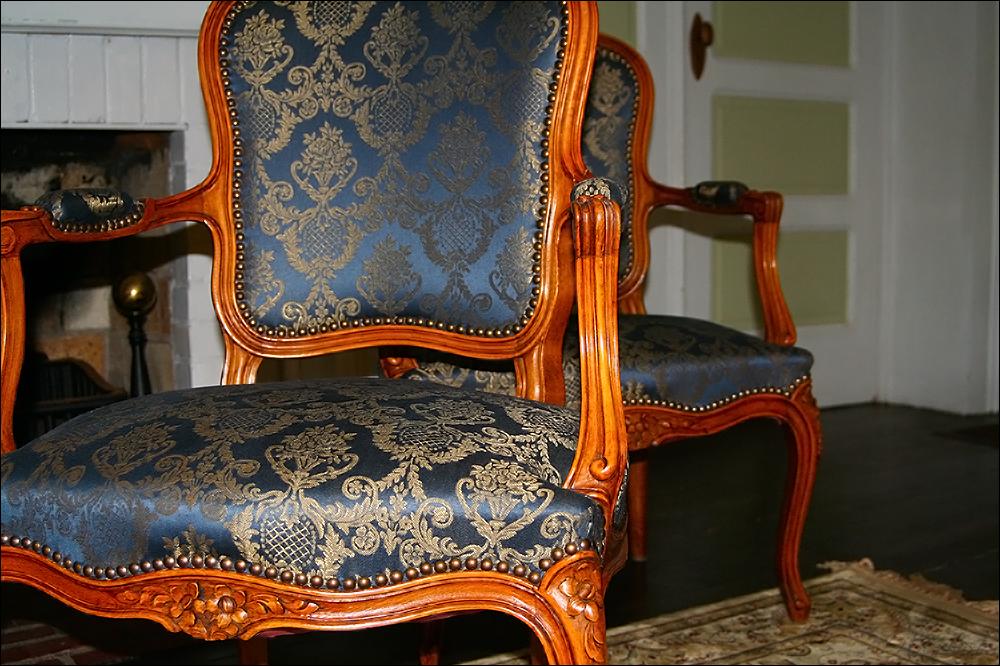
the blue chairs

blue chairs ©2008 RosebudPenfold

the furniture appears to be dreaming

The furniture appears to be dreaming; it seems endowed with a somnambulistic life, like vegetables or minerals. The cloth materials speak a silent language, like flowers, like skies, like setting suns.

-- Charles Baudelaire, from "The Double Room"
Translated by Michael Hamburger

Charles Baudelaire

Michael Hamburger

Tuesday, February 26

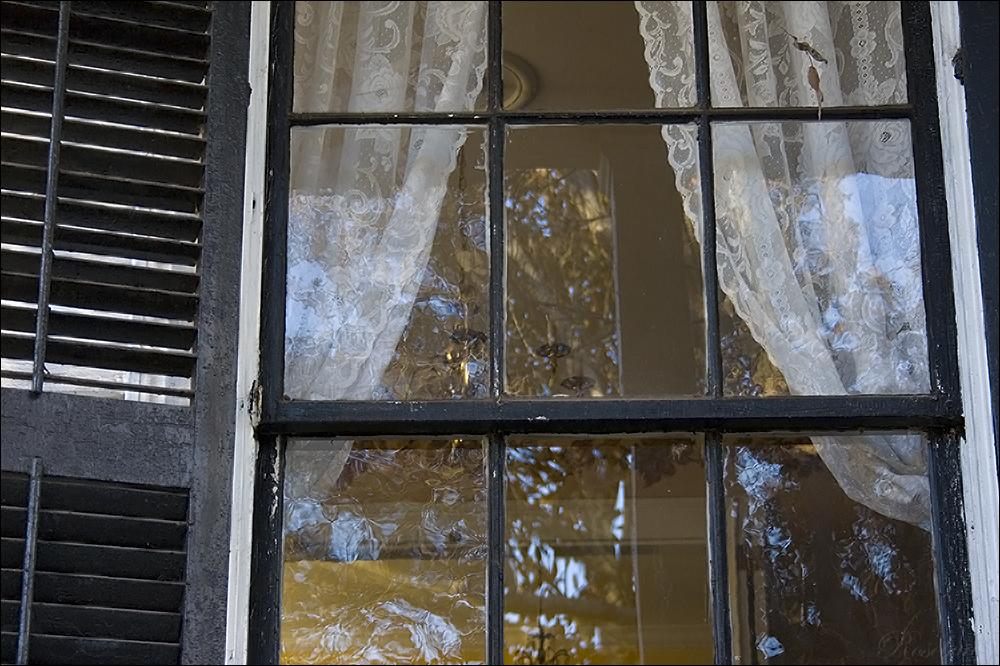
parlor window

parlor window ©2008 RosebudPenfold

Saturday, February 23

the apology

(adaptation from Petrarch)

Whoever hears in these scattered rhymes the raw sighs
my heart devoured when I was younger, or sees the soul’s
tattered phrases hanging there unclaimed, don’t scold
this art written by my other self, filled with confusion, not lies,
and forgive even this varied style I use now, that flies
as darkly as the crow, that scans the secret life of the mole,
that covers itself in Hope’s blankets, that has always told
Love’s truth, that now asks for pardon before its words run dry.
I know how rumor grew like a moth from a cocoon,
how some of you laughed when Shame stood at my door
for years, how Regret tracked me with her silent screams—
but also, and how each tree bears some fruit, how the moon
and the stars, the wind, the whole earth are images whose doors
open other worlds, if they only endure like the half-life of dreams.

-- Richard Jackson

Richard Jackson

Wednesday, February 20

lagoon|sunset

lagoon|sunset ©2008 RosebudPenfold

being there


EXT. WOODS - DAY

Chance happens on a tree with a cracked limb, hanging to the
ground. He stops, inspects the break, runs his fingers along
the split in the bark. He looks to the ground, notices that
an end of the limb has fallen on a seedling, bending it
double. Chance pulls the limb away, then kneels beside the
seedling. He removes an expensive pair of suede gloves, and,
with gentle fingers, brushes the dirt and snow away from the
seedling. Chance glances up to the remaining limbs of the
larger tree which could fall and threaten the emerging tree.
He unfolds his umbrella, places it over the seedling in a way
to give it protection, yet to still allow it to receive light
from the winter sun. Chance stands, puts his gloves back on
and continues his walk...

-- Jerzy Kosinski and Robert C. Jones Being There

Being There script (December 16, 1978 draft)

Tuesday, February 19

gathering clouds

gathering clouds ©2008 RosebudPenfold

Ryoanji: An Assay

Wherever a person stands in the garden of Ryoanji, there is always a stone that cannot be seen. It is like the sliver of absence found on the face of a man who has glimpsed in himself a thing until then unknown. Inside the silence, just before he begins to weep. Not because of the thing he has learned—monstrous or saintly, it was always within him—but for the amplitude he hadn't believed was there.

-- Jane Hirshfield, from After

Jane Hirshfield

Monday, February 18

measure

measure ©2008 RosebudPenfold

Saturday, February 16

intimate complexities

Wandering off from the workshop he would walk to nearby gardens, sit and study the intricacies of foliage, examine the particularities of individual leaves. Squinting into the sun, Rodin noted each effect that light produced on the surface—a consequence of his position or that of the leaf? Or was nature only jesting with him, doubting his senses, his abilities as draftsman, as artist? In his mind he saw how structure remained consistent, how the veins of each leaf divided, tracing the whole form of the tree on a reduced scale. By bringing back this observed detail of the specific, and incorporating it into his work as ornamentalist, Rodin invented ideas of order concerning the decorative that transcended the familiar. So precise were his points of departure that each of his small creations in plaster could bear extravagance without looking distorted. As leaf subsided to leaf, joined together in long sequences, the well-worked details of vein and stem, flesh and form, came alive. As sculpted by Rodin, nature was infused with a brilliant character, granted it by a hand that was guided by the mind—his hand, and his alone. Any attempt at mimetic reproduction of detail was countered by an artistic will beginning to assert itself, however modest the context.

These insights into the intimate complexities of a single subject proved crucial to Rodin's thinking as an artist and would come to play a formative role in his conception of the human body, in how he understood the relationship between external, visible musculature and internal, determining structure. Yes, nature was the source of all fertile refinement in human thought about creation, about how man could overcome his situation and fashion from it a comprehensive equivalent that transcended emulation. Extensive artistic observation of nature served to privilege the mind above the wealth of detail recognizable in such wrested cadences as a flower's color, the lean contours of a leaf, or the rigid designs of foliage trained to support architecture. There must have been a fragrance that escaped from the sculpting of so rich a form.

-- Rainer Crone and David Moos, on the young Auguste Rodin's career as an ornamentalist, in Rodin: Eros and Creativity

musée Rodin

Friday, February 15

lost

Taking only a minimum of gear, we started down the cliff at the far end of our camp, lowering ourselves down broken ledges by holding on to small saplings and to the roots of larger trees that projected from the mountainside. Below the cliff, we coursed through slanting thickets of bamboo and bracken and eventually emerged onto open rock...The falls thundered below us, still hidden from our view. We followed their sound and the column of mist that swirled against the dark walls of the gorge to the edge of a precipice and, from there, gazed down at last into the turbulent heart of the hidden waterfall.

The jade green flood of the Tsangpo funneled into a breach approximately fifty feet across and transformed into a sleek wave of what looked like polished air. Surging over the precipice and intersected by rays of sunlight, the river freed itself of all semblance of form and dissolved into incandescent foam as it crashed against an intermediary rock ledge seventy feet below and leapt forth again in arcs of light-filled spray. Filling the air with light and water, it resumed its descent until dissolving into a maelstrom of seething waves, fountaining up against the polished walls of the gorge.

"The falls!" Ken shouted in genuine rapture...Our voices drowned in the tempest at our feet. The air buzzed with ions. The falls were colossal, a massive curtain of foam and light hurtling between sheer granite walls. To gaze into the waters was to stare into the face of impermanence, waves and particles blurring by one after the other, beyond what the mind or eye could register. In ancient Greece, Heraclitus had proclaimed, "You can't step into the same river twice," and the prospect of measuring this mass of jetting water suddenly seemed absurd to me...

I rappelled another twenty feet down, buffeted by the spray of the falls, and entered a realm where there was little distinction between air and water. The wall was wet and smooth, flecked with glistening feldspar, but where the rope ended I reached a foot-wide shelf where I tied off the descending device and turned around into the face of the waterfall. The view was astounding: the mass of the Tsangpo transformed in the narrow breach into a great glittering curtain, dissolving into fractal jets and crashing into the cauldron below. Translucent spray exploded over my head and streamed down my spine. To immerse oneself in the "power, velocity, vastness, and madness [of water] affords one of the noblest lessons of nature," wrote Ruskin, the great eighteenth-century observer of natural processes. And I watched, mesmerized, breathing in the oxygen-rich waters and lost in the vast display...

-- Ian Baker The Heart of the World

Ian Baker: From Search and Rescue to Shangri-La

Thursday, February 14

red camellia

red camellia ©2008 RosebudPenfold

XLIV

Belovèd, thou hast brought me many flowers
     Plucked in the garden, all the summer through
     And winter, and it seemed as if they grew
In this close room, nor missed the sun and showers.
So, in the like name of that love of ours,
     Take back these thoughts which here unfolded too,
     And which on warm and cold days I withdrew
From my heart's ground. Indeed, those beds and bowers
     Be overgrown with bitter weeds and rue,
And wait thy weeding; yet here's eglantine,
     Here's ivy!—take them, as I used to do
Thy flowers, and keep them where they shall not pine.
     Instruct thine eyes to keep their colours true,
And tell thy soul, their roots are left in mine.

-- Elizabeth Barrett Browning

Sunday, February 10

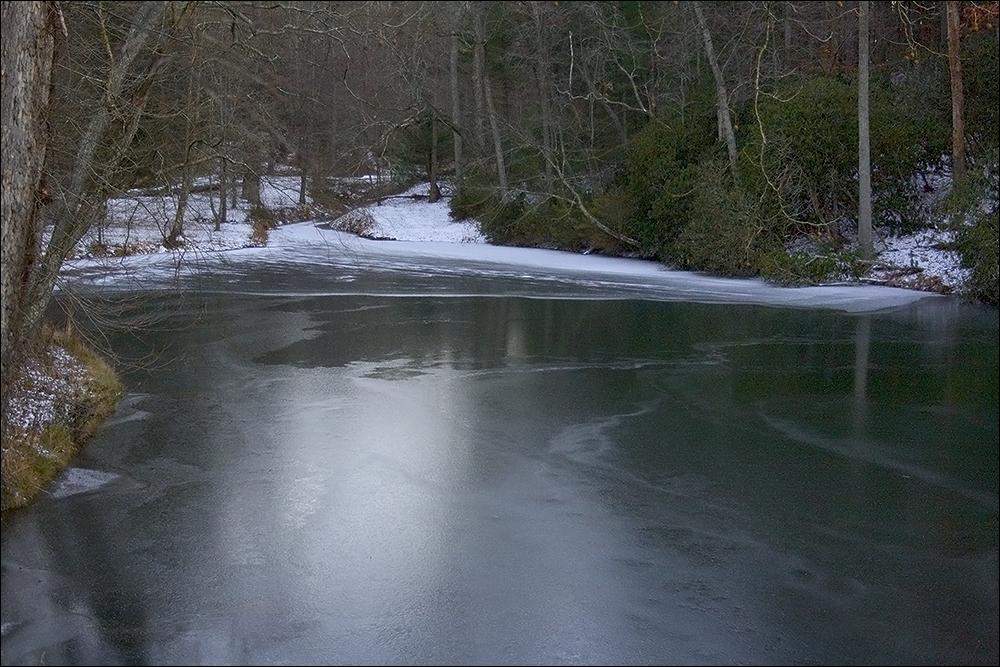
ice pond

ice pond ©2008 RosebudPenfold

the mere phrase

It is subjectivity that forcibly brings the extremes together in the moment, fills the dense polyphony with its tensions, breaks it apart with the unisono, and disengages itself, leaving the naked tone behind; that sets the mere phrase as a monument to what has been, marking a subjectivity turned to stone. The cesuras, the sudden discontinuities that more than anything else characterize the very late Beethoven, are those moments of breaking away; the work is silent at the instant when it is left behind, and turns its emptiness outward...Objective is the fractured landscape, subjective the light in which—alone—it glows into life. He does not bring about their harmonious synthesis. As the power of dissociation, he tears them apart in time, in order perhaps, to preserve them for the eternal. In the history of art, late works are the catastrophes.

-- Theodor W. Adorno, "Late Style in Beethoven" Essays on Music
Translated by Susan H. Gillespie

more Adorno at think denk

Thursday, February 7

road 4

road 4 ©2008 RosebudPenfold

Pepys and his protagonist

But, to be quite in sympathy with Pepys, we must return once more to the experience of children. I can remember to have written, in the fly-leaf of more than one book, the date and the place where I then was—if, for instance, I was ill in bed or sitting in a certain garden; these were jottings for my future self; if I should chance on such a note in after years, I thought it would cause me a particular thrill to recognize myself across the intervening distance. Indeed, I might come upon them now, and not be moved one tittle—which shows that I have comparatively failed in life, and grown older than Samuel Pepys. For in the Diary we can find more than one such note of perfect childish egotism; as when he explains that his candle is going out, "which makes me write thus slobberingly"; or as in this incredible particularity, "To my study, where I only wrote thus much of this day's passages to this,* and so out again"; or lastly, as here, with more of circumstance: "I staid up till the bellman came by with his bell under my window, as I was writing of this very line, and cried, 'Past one of the clock, and a cold, frosty, windy morning.' " Such passages are not to be misunderstood. The appeal to Samuel Pepys years hence is unmistakable. He desires that dear, though unknown, gentleman keenly to realize his predecessor; to remember why a passage was uncleanly written; to recall (let us fancy, with a sigh) the tones of the bellman, the chill of the early, windy morning, and the very line his own romantic self was scribing at the moment. The man, you will perceive, was making reminiscences—a sort of pleasure by ricochet, which comforts many in distress, and turns some others into sentimental libertines: and the whole book, if you will but look at it in that way, is seen to be a work of art to Pepys's own address.

Here, then, we have the key to that remarkable attitude preserved by him throughout his Diary, to that unflinching—I had almost said, that unintelligent—sincerity which makes it a miracle among human books. He was not unconscious of his errors—far from it; he was often startled into shame, often reformed, often made and broke his vows of change. But whether he did ill or well, he was still his own unequalled self; still that entrancing ego of whom alone he cared to write; and still sure of his own affectionate indulgence, when the parts should be changed, and the writer come to read what he had written. Whatever he did, or said, or thought, or suffered, it was still a trait of Pepys, a character of his career; and as, to himself, he was more interesting than Moses or than Alexander, so all should be faithfully set down. I have called his Diary a work of art. Now when the artist has found something, word or deed, exactly proper to a favorite character in play or novel, he will neither suppress nor diminish it, though the remark be silly or the act mean. The hesitation of Hamlet, the credulity of Othello, the baseness of Emma Bovary, or the irregularities of Mr. Swiveller, caused neither disappointment nor disgust to their creators. And so with Pepys and his adored protagonist: adored not blindly, but with trenchant insight and enduring, human toleration.

-- Robert Louis Stevenson "Samuel Pepys"

"Samuel Pepys" by Robert Louis Stevenson

The Diary of Samuel Pepys

Wednesday, February 6

watching

It was very quiet, not a leaf was stirring and it was dark; all the stars that could fill the river were there and they spilled over into the sky. The brain was completely still but very alive and watching, watching without a watcher, without a centre from which it was watching; nor was there any sensation. The otherness was there, deep within at a depth that was lost; it was action, wiping away everything without leaving a mark of what has been or what is. There was no space in which to have a border nor time in which thought could shape itself.

-- J. Krishnamurti Krishnamurti's Notebook 2 January 1962

Tuesday, February 5

Francesco Maria Testa

He meticulously catalogues his photographs according to the time of day, date and season. Any mutation or slight variation is recorded with the extreme care and attention of an expert. I asked him for some of his notes relating to his photographs. They read as follows: “File 0327. Asciano 14/05/07 h. 11.57: in diagonal a service path. In the foreground, grass cut for hay with an “island” of uncut grass. In the background, raising wheat”. It is, in fact, a beautiful art work set in diagonal, in a composition developed according to the tonality of the green, starting from a variegated light green as a base and from a succession of various shades of green, which then gradually intensify according to the zone matter and the soft surfaces of the plane areas.

--Lara-Vinca Masini

So, it is Asciano but it is not Asciano. They are rather the remaining visible traces of trials through which that landscape has passed, immobilized as human memory, beyond all time.

-- Mirella Branca

Francesco Maria Testa's photographs


grazie vilaine fille

Saturday, February 2

road 3

road 3 ©2008 RosebudPenfold

a prayer at morning

Cold, slow, silent, but returning, after so many hours.
The sight of something outside me, the day is breaking.
May salt, this one day, be sharp upon my tongue;
May I sleep, this one night, without waking.

-- Randall Jarrell

Randall Jarrell

Friday, February 1

road 2

road 2 ©2008 RosebudPenfold

prayer

Over a dock railing, I watch the minnows, thousands, swirl
themselves, each a minuscule muscle, but also, without the
way to create current, making of their unison (turning, re-
                                                                                  infolding,
entering and exiting their own unison in unison) making of themselves a
visual current, one that cannot freight or sway by
minutest fractions the water’s downdrafts and upswirls, the
dockside cycles of finally-arriving boat-wakes, there where
they hit deeper resistance, water that seems to burst into
itself (it has those layers), a real current though mostly
invisible sending into the visible (minnows) arrowing
                                         motion that forces change—
this is freedom. This is the force of faith. Nobody gets
what they want. Never again are you the same. The longing
is to be pure. What you get is to be changed. More and more by
each glistening minute, through which infinity threads itself,
also oblivion, of course, the aftershocks of something
at sea. Here, hands full of sand, letting it sift through
in the wind, I look in and say take this, this is
what I have saved, take this, hurry. And if I listen
now? Listen, I was not saying anything. It was only
something I did. I could not choose words. I am free to go.
I cannot of course come back. Not to this. Never.
It is a ghost posed on my lips. Here: never.

-- Jorie Graham

Jorie Graham

Thursday, January 31

road 1

road 1 ©2008 RosebudPenfold

Wednesday, January 30

wings

Whether or not they are of angels
or just the makeshift would-be
of human flight from humdrum
to grace, theirs is a sudden restlessness
on buoyant shoulders, an uplift
aimed at joy and making it.
So for every earthbound thought
there's the counter-weight,
a grief that covers its face in shame
then rises with the season
as if from sleep, unfolding wings
to journey through the brightness of the air.

-- John Mole

John Mole

Tuesday, January 29

winter 5- snowballs

winter 5- snowballs ©2008 RosebudPenfold

poem

      It seems a flower, but not a flower;
      It seems a mist, but not a mist.
      It comes at midnight,
      It goes away in the morning.

Its coming is like a spring dream that does not last long.
And its going is like the morning cloud. You will find it nowhere.

-- Bai Juyi
Translated by Ching Ti

Monday, January 28

winter 4- ice

winter 4- ice ©2008 RosebudPenfold

Sunday, January 27

a bell of mindfulness

My poetry is something that happens throughout the day. When I water the vegetables or wash dishes, poetry is born in me. When I sit down at the writing table, all I do is deliver the poems. Poetry comes as an inspiration and is the fruit of my mindful living. After a poem is born, I may realize that it helped me. The poem is like a "bell of mindfulness."

Sometimes you need to reread a poem you have written because it takes you back to a wonderful experience—it reminds you of the beauty available inside of you and all around you. So a poem is a flower you offer to the world, and at the same time, it is a bell of mindfulness for you to remember the presence of beauty in your daily life.

-- Thich Nhat Hahn be free where you are

Thursday, January 24

winter 3- ice

winter 3- ice ©2008 RosebudPenfold

Tuesday, January 22

winter 2

winter 2 ©2008 RosebudPenfold

silence not absence

The technology of silence
The rituals, etiquette

the blurring of terms
silence not absence

of words or music or even
raw sounds

Silence can be a plan
rigorously executed

the blueprint to a life

It is a presence
it has a history    a form

Do not confuse it
with any kind of absence

-- Adrienne Rich, from "Cartographies of Silence"

Adrienne Rich

Saturday, January 19

not making music, but listening


White Painting by Robert Rauschenberg (Guggenheim Museum)

Christopher Coppola's JC Meditation 001

In the nature of the use of chance operations is the belief that all answers answer all questions.

-- John Cage I-VI

In 1952, David Tudor sat down in front of a piano for four minutes and thirty-three seconds and did nothing. The piece 4'33'' written by John Cage, is possibly the most famous and important piece in twentieth century avant-garde. 4'33'' was a distillation of years of working with found sound, noise, and alternative instruments. In one short piece, Cage broke from the history of classical composition and proposed that the primary act of musical performance was not making music, but listening. [more]

John Cage's 4'33" by David Tudor


another 4'33"


From a review of Evgeny Kissin: John Cage 4'33" (DVD): The Stokowski transcription is a first performance and therefore of great interest. It was his last work and only discovered well after his death in 1977. The orchestral size is the same as for his Bach transcriptions but with added tubas. Some may consider that this over-romanticises the purity of Cage's essentially classical conception but I enjoyed it immensely. With regard to the orchestra – who have to pass a large clock round every one of the players without making a sound in exactly 4’33" – this work brings as big a challenge to them as any of Ives’s more extreme utterances. The New York Philharmonic mostly manages it with aplomb (apart from one of the violas who almost dropped the clock) in what was apparently an encore after a stirring performance of Rachmaninov’s Third Piano Concerto. Serebrier (a protégé of Stokowski) presides with authority – he starts off with the clock and at the very end it finally reaches Kissin just before the crowd goes wild.

Art may be practiced in one way or another, so that it reinforces the ego in its likes and dislikes, or so that it opens that mind to the world outside, and outside inside. Since the forties and through the study with D.T. Suzuki of the philosophy of Zen Buddhism, I've thought of music as a means of changing the mind. I saw art not as something that consisted of a communication from the artist to an audience but rather as an activity of sounds in which the artist found a way to let the sounds be themselves. And, in being themselves, to open the minds of people who made them or listened to them to other possibilities than they had previously considered.

-- John Cage, quoted by Larry J. Solomon here

CRC Beta v0.01

winter 1

winter 1 ©2008 RosebudPenfold

Sunt Lacrimae Rerum

The glittering dance of brilliants must be strung
On that dark thread of sadness which is time,
No matter what bright melodies are sung.

When great symphonic combers swell and climb
Then curl and, swooping, rush towards the shore,
We hear a faint and melancholy chime.

This might come from a drowned cathedral or
Be carried on the wind from inland tower
In market-place, or church on distant moor.

Beneath the surging glory and the power
Of Beethoven or Bach, or tenderness
Of Schubert lieder's frailer sonic flower

We hear the spectral sighing of distress,
For time is music's element and we
Know murderous time can offer no redress.

Yet which of us, I wonder, were he free
To choose, would wish away the voice that sings
The keening descant of mortality

Inseparable from all that music brings
Of love, heart-piercing truth, the tears in things.

-- Vernon Scannell

Vernon Scannell

Wednesday, January 16

growing up in the digital world

The John D. and Catherine T. MacArthur Foundation Series on Digital Media and Learning examines the effect of digital media tools on how people learn, network, communicate, and play, and how growing up with these tools may affect a person's sense of self, how they express themselves, and their ability to learn, exercise judgment, and think systematically.

The full text of each volume in the Series is provided for free and open access thanks to the generous support of the MacArthur Foundation. The full text of these chapters is openly available
[here]

The John D. and Catherine T. MacArthur Foundation Series on Digital Media and Learning

Tuesday, January 15

light

light ©2008 RosebudPenfold

Friday, January 11

how the light gets in

Ring the bells that still can ring,
forget your perfect offering.
There is a crack, a crack in everything.
That’s how the light gets in,
that’s how the light gets in,
that’s how the light gets in…

-- Leonard Cohen "Anthem"

Thursday, January 10

Tuesday, January 8

fireworks 1

fireworks 1©2008 RosebudPenfold

Monday, January 7

the cloud, at sunrise

the cloud, at sunrise ©2008 RosebudPenfold

something

In the inky forest,
In its maziest,

Murkiest scribble
Of words

And wordless cries,
I went for a glimpse

Of the blossomlike
White erasure

Over a huge,
Furiously crossed-out something.

-- Charles Simic, lines from "White"

via