


Thursday, January 31
Wednesday, January 30
wings
Whether or not they are of angels
or just the makeshift would-be
of human flight from humdrum
to grace, theirs is a sudden restlessness
on buoyant shoulders, an uplift
aimed at joy and making it.
So for every earthbound thought
there's the counter-weight,
a grief that covers its face in shame
then rises with the season
as if from sleep, unfolding wings
to journey through the brightness of the air.
-- John Mole
John Mole

Tuesday, January 29

poem
It seems a flower, but not a flower;
It seems a mist, but not a mist.
It comes at midnight,
It goes away in the morning.
Its coming is like a spring dream that does not last long.
And its going is like the morning cloud. You will find it nowhere.
-- Bai Juyi
Translated by Ching Ti
Monday, January 28
Sunday, January 27
a bell of mindfulness
My poetry is something that happens throughout the day. When I water the vegetables or wash dishes, poetry is born in me. When I sit down at the writing table, all I do is deliver the poems. Poetry comes as an inspiration and is the fruit of my mindful living. After a poem is born, I may realize that it helped me. The poem is like a "bell of mindfulness."
Sometimes you need to reread a poem you have written because it takes you back to a wonderful experience—it reminds you of the beauty available inside of you and all around you. So a poem is a flower you offer to the world, and at the same time, it is a bell of mindfulness for you to remember the presence of beauty in your daily life.
-- Thich Nhat Hahn be free where you are
Thursday, January 24
Tuesday, January 22
silence not absence
The technology of silence
The rituals, etiquette
the blurring of terms
silence not absence
of words or music or even
raw sounds
Silence can be a plan
rigorously executed
the blueprint to a life
It is a presence
it has a history a form
Do not confuse it
with any kind of absence
-- Adrienne Rich, from "Cartographies of Silence"
Adrienne Rich
Saturday, January 19
not making music, but listening

White Painting by Robert Rauschenberg (Guggenheim Museum)
Christopher Coppola's JC Meditation 001
In the nature of the use of chance operations is the belief that all answers answer all questions.
-- John Cage I-VI
In 1952, David Tudor sat down in front of a piano for four minutes and thirty-three seconds and did nothing. The piece 4'33'' written by John Cage, is possibly the most famous and important piece in twentieth century avant-garde. 4'33'' was a distillation of years of working with found sound, noise, and alternative instruments. In one short piece, Cage broke from the history of classical composition and proposed that the primary act of musical performance was not making music, but listening. [more]
John Cage's 4'33" by David Tudor
another 4'33"
From a review of Evgeny Kissin: John Cage 4'33" (DVD): The Stokowski transcription is a first performance and therefore of great interest. It was his last work and only discovered well after his death in 1977. The orchestral size is the same as for his Bach transcriptions but with added tubas. Some may consider that this over-romanticises the purity of Cage's essentially classical conception but I enjoyed it immensely. With regard to the orchestra – who have to pass a large clock round every one of the players without making a sound in exactly 4’33" – this work brings as big a challenge to them as any of Ives’s more extreme utterances. The New York Philharmonic mostly manages it with aplomb (apart from one of the violas who almost dropped the clock) in what was apparently an encore after a stirring performance of Rachmaninov’s Third Piano Concerto. Serebrier (a protégé of Stokowski) presides with authority – he starts off with the clock and at the very end it finally reaches Kissin just before the crowd goes wild.
Art may be practiced in one way or another, so that it reinforces the ego in its likes and dislikes, or so that it opens that mind to the world outside, and outside inside. Since the forties and through the study with D.T. Suzuki of the philosophy of Zen Buddhism, I've thought of music as a means of changing the mind. I saw art not as something that consisted of a communication from the artist to an audience but rather as an activity of sounds in which the artist found a way to let the sounds be themselves. And, in being themselves, to open the minds of people who made them or listened to them to other possibilities than they had previously considered.
-- John Cage, quoted by Larry J. Solomon here
CRC Beta v0.01
Sunt Lacrimae Rerum
The glittering dance of brilliants must be strung
On that dark thread of sadness which is time,
No matter what bright melodies are sung.
When great symphonic combers swell and climb
Then curl and, swooping, rush towards the shore,
We hear a faint and melancholy chime.
This might come from a drowned cathedral or
Be carried on the wind from inland tower
In market-place, or church on distant moor.
Beneath the surging glory and the power
Of Beethoven or Bach, or tenderness
Of Schubert lieder's frailer sonic flower
We hear the spectral sighing of distress,
For time is music's element and we
Know murderous time can offer no redress.
Yet which of us, I wonder, were he free
To choose, would wish away the voice that sings
The keening descant of mortality
Inseparable from all that music brings
Of love, heart-piercing truth, the tears in things.
-- Vernon Scannell
Vernon Scannell
Wednesday, January 16
growing up in the digital world
The John D. and Catherine T. MacArthur Foundation Series on Digital Media and Learning examines the effect of digital media tools on how people learn, network, communicate, and play, and how growing up with these tools may affect a person's sense of self, how they express themselves, and their ability to learn, exercise judgment, and think systematically.
The full text of each volume in the Series is provided for free and open access thanks to the generous support of the MacArthur Foundation. The full text of these chapters is openly available [here]
The John D. and Catherine T. MacArthur Foundation Series on Digital Media and Learning
Tuesday, January 15
Friday, January 11
how the light gets in
Ring the bells that still can ring,
forget your perfect offering.
There is a crack, a crack in everything.
That’s how the light gets in,
that’s how the light gets in,
that’s how the light gets in…
-- Leonard Cohen "Anthem"
Thursday, January 10
Tuesday, January 8
Monday, January 7
Friday, December 28
the child
The only simplicity that matters is the simplicity of the heart. If that be gone, it can be brought back by no turnips or cellular clothing; but only by tears and terror and the fires that are not quenched. If that remains, it matters very little if a few Early Victorian armchairs remain along with it...So long as human society will leave my spiritual inside alone, I will allow it, with a comparative submission, to work its wild will with my physical interior. I will submit to cigars. I will meekly embrace a bottle of Burgundy. I will humble myself to a hansom cab. If only by this means I may preserve to myself the virginity of the spirit, which enjoys with astonishment and fear. I do not say that these are the only methods of preserving it. I incline to the belief that there are others. But I will have nothing to do with simplicity which lacks the fear, the astonishment, and the joy alike. I will have nothing to do with the devilish vision of a child who is too simple to like toys.
The child is, indeed, in these, and many other matters, the best guide. And in nothing is the child so righteously childlike, in nothing does he exhibit more accurately the sounder order of simplicity, than in the fact that he sees everything with a simple pleasure, even the complex things. The false type of naturalness harps always on the distinction between the natural and the artificial. The higher kind of naturalness ignores that distinction. To the child the tree and the lamp-post are as natural and as artificial as each other; or rather, neither of them are natural but both supernatural. For both are splendid and unexplained. The flower with which God crowns the one, and the flame with which Sam the lamplighter crowns the other, are equally of the gold of fairy-tales. In the middle of the wildest fields the most rustic child is, ten to one, playing at steam-engines. And the only spiritual or philosophical objection to steam-engines is not that men pay for them or work at them, or make them very ugly, or even that men are killed by them; but merely that men do not play at them. The evil is that the childish poetry of clockwork does not remain. The wrong is not that engines are too much admired, but that they are not admired enough. The sin is not that engines are mechanical, but that men are mechanical.
-- G.K. Chesterton "On Sandals and Simplicity" Heretics (1905)
Heretics
Tuesday, December 25
Illumination
Ground lapis for the sky, and scrolls of gold,
Before which shepherds kneel, gazing aloft
At visiting angels clothed in egg-yolk gowns
Celestial tinctures smuggled from the East,
From sunlit Eden, the palmed and plotted banks
Of sun-tanned Aden. Brought home in fragile grails,
Planted in England, rising at Eastertide,
Their petals cup stamens of topaz dust,
The powdery stuff of cooks and cosmeticians.
But to the camels-hair tip of the finest brush
Of Brother Anselm, it is the light of dawn,
Gilding the hems, the sleeves, the fluted pleats
Of the antiphonal archangelic choirs
Singing their melismatic pax in terram.
The child lies cribbed below, in bestial dark,
Pale as the tiny tips of crocuses
That will find their way to the light through drifts of snow.
-- Anthony Hecht
Anthony Hecht
Monday, December 24
the infinite whisper
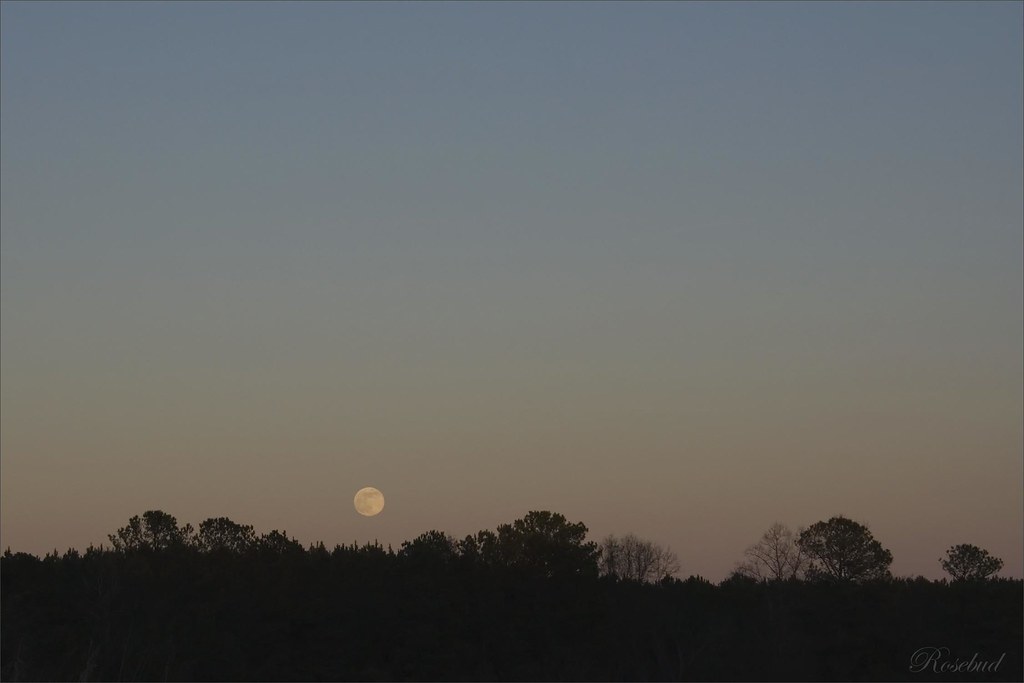
How deeply can one go into the distances
and yet come back unannihilated by the immensity they represent?
The doorway gave way suddenly: I was projected into the infinite whisper.
-- Peyton Houston XVI Complex Songs at the Borders of Silence
Sunday, December 23
still time
Aren't we enlarged
by the scale of what we're able
to desire? Everything,
the choir insists,
might flame;
inside these wrappings
burns another, brighter life,
quickened, now,
by song: hear how
it cascades, in overlapping,
lapidary waves of praise? Still time.
Still time to change.
-- Mark Doty, from "Messiah (Christmas Portion)"
more from "Messiah (Christmas Portion") here
Mark Doty
Thursday, December 20
Stiller Freund
Stiller Freund der vielen Fernen, fühle,
wie dein Atem noch den Raum vermehrt.
Im Gebälk der finsteren Glockenstühle
laß dich läuten. Das, was an dir zehrt
Silent friend of many distances,
feel how your breath expands space.
Let yourself peal among the beams
of dark belfries. What draws
wird ein Starkes über dieser Nahrung.
Geh in der Verwandlung aus und ein,
Was ist deine leidenste Erfahrung?
Ist dir Trinken bitter, werde Wein.
you will grow strong from this nourishment.
Know transformation through and through.
What experience has been most painful to you?
If the drinking's bitter, turn yourself to wine.
So in dieser Nacht aus Überdruß
Zauberkraft am Kreuzweg deiner Sinne,
ihrer seltsamen Begegnung Sinn.
In this vast night, be the magic power
at your senses' intersection,
the meaning of their strange encounter.
Und wenn dich das Irdische vergaß,
zu der stillen Erde sag: Ich rinne.
Zu dem raschen Wasser sprich: Ich bin.
And if the earthly has forgotten
you, say to the still earth: I flow.
To the rushing water speak: I am.
-- Rainer Maria Rilke
Translated by A. Poulin, Jr.
Stiller Freund (Lorraine Hunt Lieberson)
from this cd

Wednesday, December 19
Monday, December 17
bed is too small
Bed is too small for my tiredness;
Give me a hillside with trees.
Tuck a cloud up under my chin.
Lord, blow the moon out, please.
Rock me to sleep in a cradle of dreams;
Sing me a lullaby of leaves.
Tuck a cloud up under my chin.
Lord, blow the moon out, please.
-- Traditional
Saturday, December 15
potentialities
I meant that it is often supposed that in order to write a play one has, or ought to have, an idea, or certain ideas, or a coherent set of ideas that must be translated into scenic images, which will illustrate these ideas or doctrines...
In actual fact, the language of artistic creation is often that which is the most complex, the most charged with meaning; far from having to be determined by some system of thought which is extrinsic or superior to it, and to which it merely has to submit, it's often the artist's language which stimulates and engenders the thought of others, which creates new ways of seeing the world, hence a new mentality. Ideologies, sociologies, systems of aesthetics are nurtured on works of art. There can be no philosophy of culture without culture itself, no philosophical theory without those living examples of psychology, works of art, whose authors did not need to know or take into account the closed experiences of the past. Otherwise there would never have been anything new. This new element, which is knowledge of something, is also construction, of course, since any knowledge, any encounter between the self and the world is a projection of the self into that substance which is the world, a projection, that's to say a pattern, a shape, an architecture.
To sum it all up, let's say that the artist may perhaps not have any ideas at the back of his head, or over the top of his head, which he feels bound to demonstrate. But he has ideas in his head which are potentialities, living seeds which shoot up and blossom in their own way, according to their own nature, according to the modalities proper to creation which is a concrete, autonomous form of thought, exploring the world and at the same time constructing it, since all knowledge is projection.
A whole world is built up, or disclosed, as the artist writes it and thinks it.
Practice makes perfect, or, as Raymond Queneau has neatly and wittily put it: 'C’est en forgeant qu’on devient forgeron, c’est en écrivant qu’on devient écriveron.'*
-- Eugène Ionesco Fragments of a Journal
Translated by Jean Stewart
*It is in forging that one becomes a blacksmith, it is in writing that one becomes a writesmith.
Thursday, December 13
i know you are there
Whatever you do mindfully is meditation. When you touch a flower, you can touch it with your fingers, but better yet, you can touch it mindfully, with your full awareness. "Breathing in—I know that the flower is there; breathing out—I smile at the flower." While you are practicing in this way, you are really there and at the same time, the flower is really there. If you are not really there, nothing is there. The sunset is something marvelous and so is the full moon, but since you are not really there, the sunset is not for you. From time to time, I let myself look at the full moon; I take a deep breath in and a deep breath out, and I practice: "I know you are there, and I am very glad about it." I practice that with the full moon, with the cherry blossoms . . . We are surrounded by miracles, but we have to recognize them; otherwise there is no life.
-- Thich Nhat Hanh True Love
Thich Nhat Hanh
Wednesday, December 12
Monday, December 10
Friday, December 7
Thursday, December 6
a moment's perfect carelessness
Still, if you are in luck, you may be granted,
As, inland, one can sometimes smell the sea,
A moment's perfect carelessness, in which
To stumble a few steps and sink to sleep
In the same clearing where, in the old story,
A holy man discovered Vishnu sleeping,
Wrapped in his maya, dreaming by a pool
On whose calm face all images whatever
Lay clear, unfathomed, taken as they came.
-- Richard Wilbur, from "Walking to Sleep"
Richard Wilbur
Thursday, November 29

an idea heard
The contradictions that are found in opus 23 reappear in the Serenade for clarinet, basset-horn, mandoline, guitar, violin, viola, violoncello, and a deep male voice, opus 24. Here the fourth movement, a setting of Petrarch's Sonnet no. 217, may be called strict twelve-tone. The singer repeats the same twelve notes twelve times; but since a line of Petrarch has only eleven syllables, each successive verse begins one note earlier in the twelve-note series and has a different melodic configuration. The series is therefore not a melody but a premelodic idea, used to furnish the stuff of melody. This is not new: both Beethoven and Brahms used motifs this way, but neither had conceived of a set of pitches as entirely divorced from their rhythmic and harmonic implications. The motif, which has always a specific contour, a profile, in becoming a series loses this attribute of shape. The series is not a musical idea in the normal sense of that phrase. It is not properly speaking something heard, either imaginatively or practically; it is transmuted into something heard.
The motif, on the other hand, is an idea heard, and Schoenberg's development of motivic material in other pieces of the Serenade is remarkably sophisticated, particularly when compared with the simple-minded, obsessive repetitions of the Petrarch sonnet. In most of the Serenade, this complex motivic elaboration and an atonal language are put to work in the re-creation of late eighteenth- and early nineteenth-century phrasing. The evocation of the elegant surface of the past was by 1923 as much a part of Schoenberg's music as of Strauss's (in Ariadne auf Naxos) or Stravinsky's (in Pulcinella and L'Histoire d'un soldat). A high price was set on charm. The ostensibly light character of the Serenade, opus 24, is still a stumbling block in appreciating its merit; its high gloss can awaken resentment. There is no contradiction, however, between its highly experimental character—its technical adventurousness, in fact—and the bland efficiency with which it turns back to the past. The experiments are designed to recapture the security of a vanished classicism; the smoothness of surface is a measure of their success.
-- Charles Rosen arnold schoenberg
Arnold Schoenberg: Serenade op. 24 (Excerpts)
Wednesday, November 28
The sight of anything extremely beautiful, in nature or in art, brings back the memory of what one loves, with the speed of lightning. That is, ...all that is beautiful and sublime in the world takes part in the beauty of what one loves, and this unexpected glimpse of happiness immediately fills the eyes with tears. This is how love of the beautiful and love give each other life.
-- Stendhal On Love
Translated by John Sell
Monday, November 26

philosopher's stone
There existed long ago in Tibetan, Indian and partly also in Chinese Buddhism the idea that the religious practice of meditation serves the goal of producing within the still living and mortal body the diamond body, into which you move, so to speak. Already in this lifetime you use your diamond body more and more as a dwelling place, so that at the moment of death, like a skin which falls off from a fruit, this mortal body falls away and the glorified body, or in Eastern language, the diamond body, is already there. The glorified body, a sort of immortal substance as carrier of the individual personality, is already produced by religious practice during life-time. The same idea, which is strange to official Christian teaching, does come up vigorously in alchemical philosophy. The alchemists, too, strove from the beginning to produce such a glorified or diamond body. In order to build up this glorified body, called the philosopher's stone, you must repeat the whole process of creation.
-- Marie-Louise von Franz Patterns of Creativity Mirrored in Creation Myths
Marie-Louise von Franz
Tom Waits with Kronos Quartet: Diamond in Your Mind
Saturday, November 24

Autumn Song
Now that the leaves have achieved
their riotous colors, and are scattering
back to their original condition of soil,
now that the nests are all visible—
I can study what it means
to be perfectly balanced, how
to shelter my bowl of emptiness,
how to wait for my bird to return.
-- Philip Terman, from Book of the Unbroken Days
Thursday, November 22
a dose of tea
Peter never stopped running or looked behind him until he got home to the big fir-tree. He was so tired that he flopped down upon the nice soft sand on the floor of the rabbit-hole, and shut his eyes. His mother was busy cooking; she wondered what he had done with his clothes. It was the second little jacket and pair of shoes that Peter had lost in a fortnight. I am sorry to say that Peter was not very well during the evening. His mother put him to bed, and made some camomile tea; and she gave a dose of it to Peter! "One tablespoon to be taken at bedtime." But Flopsy, Mopsy and Cotton-tail had bread and milk and blackberries, for supper.
-- Beatrix Potter The Tale of Peter Rabbit
at once its own, and yours
By summer’s end there are
No more perfect leaves.
But won't you be ashamed
To count the passing year
At its mere cost, your debt
Inevitably paid?
For every year is costly,
As you know well. Nothing
Is given that is not
Taken, and nothing taken
That was not first a gift.
The gift is balanced by
Its total loss, and yet,
And yet the light breaks in,
Heaven seizing its moments
That are at once its own
And yours. The day ends
And is unending where
The summer tanager,
Warbler, and vireo
Sing as they move among
Illuminated leaves.
-- Wendell Berry, lines from "Sabbaths 1998, VI"
Wednesday, November 21

Tuesday, November 20
place
There's an exercise I do with my students where I ask them to draw a sort of blueprint of the house they grew up in and place a few things they remember around the house. And then, using those things, write a sentence about each of them, finally turning those sentences into a sort of poem of reminiscence. For me, the physical place—especially as it lives in memory—is an avenue into emotion and idea. It's a doorway through which you can apprehend those other things. Without that, I think I'd find it a lot harder to find my way to emotion, epiphany, whatever it is that's going to happen in a poem. The best poem is almost always the one that is unplanned. You're fretful throughout, thinking, "This one's going to crap out like they usually do." But then something wonderful and unexpected happens and part of the answer is place is an avenue to get to these other things.
-- Frederick Smock, interviewed in Poets on Place by W.T. Pfefferle
W.T. Pfefferle on Frederick Smock
Friday, November 16

Wednesday, November 14

L'infinito
Sempre caro mi fu quest'ermo colle
E questa siepe che da tanta parte
De'll ultimo orrizonte il guarde esclude.
Ma sedendo e mirando interminati
Spazi di là da quella, e sovrumani
Silenzi, e profondissima quiete,
Io nel pensier mi fingo, ove per poco
Il cor non si spaura. E come il vento
Odo stormir tra queste piante, io quello
Infinito silenzio a questa voce
Vo comparando; e mi sovvien l'eterno,
E le morte stagioni, e la presente
E viva, e'l suon di lei. Così tra questa
Immensità s'annega il pensier mio:
E'l naufragar m'è dolce in questo mare.
I've always loved this lonesome hill
And this hedge that hides
The entire horizon almost, from sight.
But sitting here in a daydream, I picture
The boundless spaces away out there, silences
Deeper than human silence, an unfathomable hush
In which my heart is hardly a beat
From fear. And hearing the wind
Rush rustling through these bushes,
I pit its speech against infinite silence—
And a notion of eternity floats to mind,
And the dead seasons, and the season
Beating here and now, and the sound of it. So
In this immensity my thoughts all drown;
And it's easeful to be wrecked in seas like these.
-- Giacomo Leopardi
Translated by Eamon Grennan
Giacomo Leopardi
Eamon Grennan
Sunday, November 11

change by numbers
VALENTINE: If you knew the algorithm and fed it back say ten thousand times, each time there'd be a dot somewhere on the screen. You'd never know where to expect the next dot. But gradually you'd start to see this shape, because every dot will be inside the shape of this leaf. It wouldn't be a leaf, it would be a mathematical object. But yes. The unpredictable and the predetermined unfold together to make everything the way it is. It's how nature creates itself, on every scale, the snowflake and the snowstorm. It makes me so happy. To be at the beginning again, knowing almost nothing. People were talking about the end of physics. Relativity and quantum looked as if they were going to clean out the whole problem between them. A theory of everything. But they only explained the very big and the very small. The universe, the elementary particles. The ordinary-sized stuff which is our lives, the things people write poetry about — clouds — daffodils — waterfalls — and what happens in a cup of coffee when the cream goes in — these things are full of mystery, as mysterious to us as the heavens were to the Greeks. We're better at predicting events at the edge of the galaxy or inside the nucleus of an atom than whether it'll rain on auntie's garden party three Sundays from now. Because the problem turns out to be different. We can't even predict the next drip from a dripping tap when it gets irregular. Each drip sets up the conditions for the next, the smallest variation blows prediction apart, and the weather is unpredictable the same way, will always be unpredictable. When you push the numbers through the computer you can see it on the screen. The future is disorder. A door like this has cracked open five or six times since we got up on our hind legs. It's the best possible time to be alive, when almost everything you thought you knew is wrong.
(Pause.)
HANNAH: The weather is fairly predictable in the Sahara.
VALENTINE: The scale is different but the graph goes up and down the same way. Six thousand years in the Sahara looks like six months in Manchester, I bet you.
HANNAH: How much?
VALENTINE: Everything you have to lose.
HANNAH: (Pause) No.
VALENTINE: Quite right. That's why there was corn in Egypt.
-- Tom Stoppard Arcadia
Tom Stoppard's Arcadia
Saturday, November 10

afternoon ride
After lunch I bicycled to Merton St. as arranged and called for Jenkin. We set off along Parks Road, then through Wolvercote and Port Meadow. We went by the tow path, between golden trees, crossing many bridges, to Wytham village. Here, in defiance of the notice "strictly private" we entered with bated breath just under a game keeper's house, where my bike made a great noise. We met no one. The wood was glorious. It contains all kinds: in places there are open glades of green trunked oaks and brown bracken, elsewhere the intensest thickets. We got into open country on top of the hill — grassland with a lot of little valleys walled (partly) with some kind of white rock. Below was a huge landscape, behind us the edge of the wood, chiefly silver birches. It was at once so lonely, so wild, so luxurious, that we both thought of Acrasia's bower of bliss. To add to that suggestion, Jenkin saw at no great distance, a very comely couple in flagrante.
We went down the other side of the hill, emerging on the road at Swinford Bridge. We turned right and came along the river bank under the side of the wood. At Godstow we had a cup of tea in the Trout Inn, and so back to town.
-- C.S. Lewis, journal entry 14 October 1922, in All My Road Before Me ed. Walter Hooper
Sunday, November 4

Saturday, November 3
up against the limits
When I think of our artistic age, I sometimes think of the recently remastered 1958 Prestige sessions John Coltrane: Fearless Leader. In these CDs you can hear Coltrane straining against the formal conventions of hard-bop standards. Particularly in med-tempo and upbeat songs like "Spring is Here" and "Come Rain or Come Shine," tempi are not only speeded up (as Miles Davis subsequently did with his own compositions from Kind of Blue), but sound rushed, as if Coltrane were not only impatient, but even frustrated with the constraints of convention. His solos seem jumpy and jittery, the trills ultimately don't lead him anywhere, that is, anywhere new. But you can hear the first signs of his odd fingerings and the beginnings of those rippling "sheets of sound" he became renowned for later in his own groups with "the quartet." Usually we think of 1961, specifically the Village Vanguard sessions, as Coltrane's breakthrough into free jazz, but the earlier sessions are interesting not only musically but also because they reveal Coltrane up against the limits of his age: there were few models for what would come next. In the following two years he'd work with Miles Davis and avant-garde players like Ornette Coleman and Don Cherry—so he seems in these late-fifties recordings, retrospectively at least, trapped in a musical culture that had exhausted its capacity for invention. The musical instrument and the word, in spite of our longing to make language an expression of individuality do not exist in a vacuum, do not remain static, as in Blake's parody of the "crystal palace" of heaven. I'm reminded of Mao Tse-Tung's famous aphorism: "Where do correct ideas come from? Do they fall out of the sky? No. Are they innate in the mind? No. They come from social practice..."
-- Ira Sadoff, in "History Matters: A Minority Report" American Poetry Review 36:6
Ira Sadoff
John Coltrane: Fearless Leader
Sibelius and Coltrane on the town (Alex Ross on shared intervals)
Thursday, November 1

Wednesday, October 31
a bridge of light
The spirit-world around this world of sense
Floats like an atmosphere, and everywhere
Wafts through these earthly mists and vapors dense
A vital breath of more ethereal air.
Our little lives are kept in equipoise
By opposite attractions and desires;
The struggle of the instinct that enjoys,
And the more noble instinct that aspires.
These perturbations, this perpetual jar
Of earthly wants and aspirations high,
Come from the influence of an unseen star,
An undiscovered planet in our sky.
And as the moon from some dark gate of cloud
Throws o'er the sea a floating bridge of light,
Across whose trembling planks our fancies crowd
Into the realm of mystery and night,—
So from the world of spirits there descends
A bridge of light, connecting it with this,
O'er whose unsteady floor, that sways and bends,
Wander our thoughts above the dark abyss.
-- Henry Wadsworth Longfellow, from "Haunted Houses"
"Haunted Houses"
Tuesday, October 30


think that you're gliding
Think that you're gliding out from the face of a cliff
like an eagle. Think you're walking
like a tiger walks by himself in the forest.
You're most handsome when you're after food.
-- Rumi
Translated by Coleman Barks
Sunday, October 28
the glance
When I arrived at Picasso's on Rue de la Boétie I was as deeply moved and as full of respect as though I were having an audience with the Pope.
"I have come to see you," I said, "before visiting the Louvre."
"You're quite right" he answered.
I brought a small painting, carefully packed, which was called The Girl of Figuera. He looked at it for at least fifteen minutes, and made no comment whatever. After which we went up to the next story, where for two hours Picasso showed me quantities of his paintings. He kept going back and forth, dragging out great canvases which he placed against the easel. Then he went to fetch others among an infinity of canvases stacked in rows against the wall. I could see that he was going to enormous trouble. At each new canvas he cast me a glance filled with a vivacity and an intelligence so violent that it made me tremble. I left without in turn having made the slightest comment.
At the end, on the landing of the stairs, just as I was about to leave we exchanged a glance which meant exactly,
"You get the idea?"
"I get it!"
-- Salvador Dali The Secret Life of Salvador Dali
Translated by Haakon M. Chevalier
The Girl of Figuera
Friday, October 26

to see the stars
We must unlearn the constellations to see the stars.
-- Jack Gilbert, from "Tear It Down"
Tear It Down
Wednesday, October 24

a turning
Evella and I wandered and wrote you occasionally. I was in a beautiful spell. It was in an autumn and it was a turning round, through light and darkness, under suns and stars, in a fantasy land. The faces of days were disaster and passion. The luminous wind was binding the autumn to the glistening world, blowing it round through trees with a sound of the breaking sea, and the sun was driving summer away, weaving autumn into the world and turning a wheel in Evella and me, turning us towards and turning us away—all love is a turning on a spit, towards, through, and away from flame—and we were like sleepwalkers and Evella would turn to me and say, 'Who are you?' and I would murmur, 'I am you and you are me and we are some rabblement of soul . . .'
-- William Goyen The House of Breath
Sunday, October 21

Nothing Twice
Nothing can ever happen twice.
In consequence, the sorry fact is
that we arrive here improvised
and leave without the chance to practice.
Even if there is no one dumber,
if you're the planet's biggest dunce,
you can't repeat the class in summer:
this course is only offered once.
No day copies yesterday,
no two nights will teach what bliss is
in precisely the same way,
with exactly the same kisses.
One day, perhaps, some idle tongue
mentions your name by accident:
I feel as if a rose were flung
into the room, all hue and scent.
The next day, though you're here with me,
I can't help looking at the clock:
A rose? A rose? What could that be?
Is it a flower or a rock?
Why do we treat the fleeting day
with so much needless fear and sorrow?
It's in its nature not to stay:
Today is always gone tomorrow.
With smiles and kisses, we prefer
to seek accord beneath our star,
although we're different (we concur)
just as two drops of water are.
-- Wislawa Szymborska
Translated by Stanislaw Baranczak and Clare Cavanagh
Wislawa Szymborska
Thursday, October 18

Strings in the Earth and Air (Chamber Music I)
Strings in the earth and air
Make music sweet;
Strings by the river where
The willows meet.
There's music along the river
For Love wanders there,
Pale flowers on his mantle,
Dark leaves on his hair.
All softly playing,
With head to music bent,
And fingers straying
Upon an instrument.
-- James Joyce
the modernist composer Luciano Berio and James Joyce
saturated textures
The sheer expressive force, the Richard Serra-like physical mass of these large-scale, purely instrumental actions can be nigh on overwhelming. In them, Berio arrives at a highly refined late style that is comparable, in terms of its relationship to his total output, to that of Elliott Carter. But where Carter achieves his late-period clarity through a lightening of texture, Berio elucidates the saturated textures that he always favored by relaxing overall tempos & redistributing the constituent parts of the orchestra around the stage. (read more)
-- Tom Myron, on Luciano Berio's orchestral essays
Tom Myron
like verbal taffy
It begins in a hush of mystery, born from a blurry gong. The eight voices emerge harmonizing from the silence, suddenly breaking free in a flurry of muttered syllables and disjointed quotes from the works of Claude Lévi-Strauss, the French anthropologist. Concerned largely with Brazilian water myths, the quotations are used as "poetic fragments," at first articulated over bursts of percussion and waves of amplified harmonizing. Occasionally disrupted by thick clusters of music from the orchestra, the voices unspool their text in dizzying patterns, at times in unison, at others pursuing individual courses, teasing and deforming the words like verbal taffy. The orchestra is never at rest; connecting its periodic explosions with frantic stretches of piano, spasms of vibraphone, warbling flutes, rippling fanfares.... (read more)
-- Allen B. Ruch on Luciano Berio's Sinfonia (and Samuel Beckett)
The Modern Word
Wednesday, October 17

Tuesday, October 16

with its own light
The perfect act is empty. Who can see it? He who forgets form. Out of the formed, the unformed, the empty act proceeds with its own form. Perfect form is momentary. Its perfection vanishes at once. Perfection and emptiness work together for they are the same: the coincidence of momentary form and eternal nothingness. Form: the flash of nothingness. Forget form, and it suddenly appears, ringed and reverberating with its own light, which is nothing. Well, then: stop seeking. Let it all happen. Let it come and go. What? Everything: i.e., nothing.
-- Thomas Merton Cables to the Ace or Familiar Liturgies of Misunderstanding
Monday, October 15

Sonnet 24
Mine eye hath play'd the painter and hath stell'd
Thy beauty's form in table of my heart;
My body is the frame wherein 'tis held,
And perspective it is best painter's art.
For through the painter must you see his skill
To find where your true image pictur'd lies,
Which in my bosom's shop is hanging still,
That hath his windows glazed with thine eyes.
Now see what good turns eyes for eyes have done:
Mine eyes have drawn thy shape, and thine for me
Are windows to my breast, wherethrough the sun
Delights to peep, to gaze therein on thee.
Yet eyes this cunning want to grace their art—
They draw but what they see, know not the heart.
-- William Shakespeare
W.H. Auden on Shakespeare's Sonnets
an angel might come
The peculiar grace of a Shaker chair is due to the fact that it was made by someone capable of believing that an angel might come and sit on it. Indeed the Shakers believed their furniture was designed by angels— and [William] Blake believed his ideas for poems and engraving came from heavenly spirits...
"Imagination," for Blake, is the faculty by which man penetrates ultimate reality and religious mystery. It is completely distinct from "allegorical fantasy."
"I know that this world is a world of imagination and vision [wrote Blake in a letter] ...but everybody does not see alike. To the eyes of a miser a guinea is more beautiful than the sun, and a bag worn with the use of money has more beautiful proportions than a vine filled with grapes. The tree which moves some to tears of joy is in the eyes of others only a green thing that stands in the way. Some see nature all ridicule and deformity, and by these I shall not regulate my proportions, and some scarce see nature at all. But to the eyes of the man of imagination, nature is imagination itself. As a man is, so he sees. As the eye is formed, so are its powers... To me this world is all one continuous vision of fancy or imagination."
-- Thomas Merton, in his introduction to Religion in Wood: A Book of Shaker Furniture by Edward Deming Andrews
The Shakers of Pleasant Hill
Saturday, October 6

Joy
Don't cry, it's only music,
someone's voice is saying;
no one you love is dying.
It's only music. And it was only spring,
the world's unreasoning body
run amok, like a saint's, with glory,
that overwhelmed a young girl
into unreasoning sadness.
Crazy, she told herself,
I should be dancing with happiness.
But it happened again. It happens
when we make bottomless love—
there follows a bottomless sadness
which is not despair
but its nameless opposite.
It has nothing to do with the passing of time.
It's not about loss. It's about
two seemingly parallel lines
suddenly coming together
inside us, in some place
that is still wilderness.
Joy, joy, the sopranos sing,
reaching for the shimmering notes
while our eyes fill with tears.
-- Lisel Mueller
Lisel Mueller
the music of what happens
There is a twofold confusion that bedevils the reading of poetry. The first is the reading of poetry as articulated intention; that is to say, imagining that the poet intended to mean some specific bare thing, then sat down to dress it up in pretty, graceful, elegant forms that you could then strip away to find the naked meaning. Fancy talk. No wonder the plain-spoken sometimes hate and distrust it. Plain speech, if such a thing truly exists, is fine for instrumental and moral purposes but is of little use in registering experience as such. Plain speech is in fact never quite as plain as it seems. Tell me what you really mean, the plain-spoken demand. But a poem does not have a meaning that it then disguises: it discovers meaning in the process of being written and read, much as people discover meaning in places, in sensations, in other people. The poet has a broad subject, but he cannot know what line or what word will come next in his poem. The poet listens as intently as he speaks and sings.
The second confusion springs from the first. It involves the reading of poetry primarily in order to find out about the poet as a person in real life. This involves reading the poem as symptom or evidence. Poetry is useless as evidence. As far as I know, no poem has ever been adduced as evidence in court. The truths the poem deals with are not evidentiary truths. Truths they are, and deep truths at that, but they are not in the form of falsifiable statements such as science or law demands. They do not lead back to the real life outside the poem: the truths refer to the real life inside the poem...
Poetry is not symptom or evidence but state: it is not the result of what happened before but the music of what happens, and it is dangerous ever to forget that. The selves that inhabit poems are imagined selves, products of the imagination, and their great power derives from their ability to spread through our own imaginations like a music that is strictly itself. The life that moves in poems has enormous sharpness because it has been distilled into such a state that it is no longer possible to distinguish the universal from the particular in it. The real life in poems comes at us with the sudden clear cry of particularity as any phenomenon might, but it does not conduct us into the world of cause and effect, the world of biography. Biography is secondary to history, and history is secondary to those brilliant moments of perception that mere existence makes possible. There it is possible to be playful in the midst of tragedy, to pun on sickness and death itself.
-- George Szirtes "Missing Dates/Sleeve Notes" Poetry October 2007
George Szirtes
Poetry
Friday, October 5
The Coming of Light
Even this late it happens:
the coming of love, the coming of light.
You wake and the candles are lit as if by themselves,
stars gather, dreams pour into your pillows,
sending up warm bouquets of air.
Even this late the bones of the body shine
and tomorrow's dust flares into breath.
-- Mark Strand
via Whiskey River
Wednesday, October 3
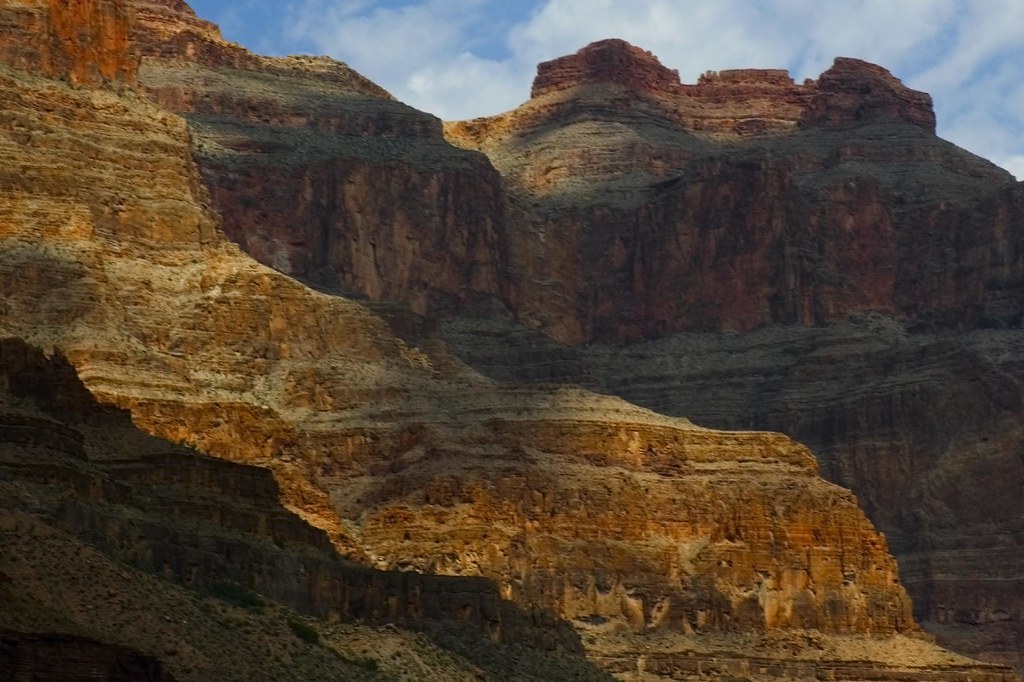
The fact is, the public make use of the classics of a country as a means of checking the progress of Art. They degrade the classics into authorities. They use them as bludgeons for preventing the free expression of Beauty in new forms. They are always asking a writer why he does not write like somebody else, or a painter why he does not paint like somebody else, quite oblivious of the fact that if either of them did anything of the kind he would cease to be an artist.
-- Oscar Wilde The Soul of Man
The Soul of Man
Tuesday, October 2
Work on good prose has three steps: a musical stage when it is composed, an architectonic one when it is built, and a textile one when it is woven.
-- Walter Benjamin One-Way Street
via About Last Night
Lee Miller

Rene Magritte by Lee Miller
The Art of Lee Miller
Video with Tony Penrose
via Conscientious
also The surreal goddess
Monday, October 1
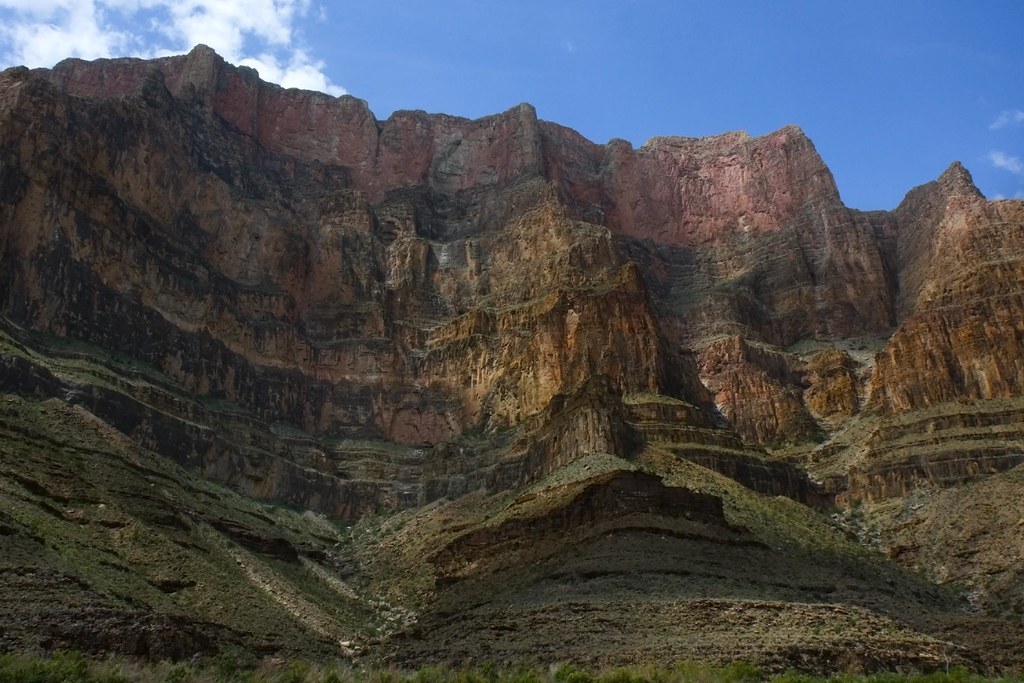
XXVI
The world washed in his imagination,
The world was a shore, whether sound or form
Or light, the relic of farewells,
Rock, of valedictory echoings,
To which his imagination returned,
From which it sped, a bar in space,
Sand heaped in the clouds, giant that fought
Against the murderous alphabet:
The swarm of thoughts, the swarm of dreams
Of inaccessible Utopia.
A mountainous music always seemed
To be falling and to be passing away.
-- Wallace Stevens, from The Man with the Blue Guitar
The Man with the Blue Guitar
Saturday, September 29
her voice pushed back the boundaries of the world
In any art there is a Higher Regularity which seems to conventional people arbitrary and to unconventional people commonplace: Irene's singing was of this sort. And of all the singers I have ever heard she was the most essentially dramatic: she could not have sung a scale without making it seem a part of someone's life, a thing of human importance. Yet when the song and her voice said: We are all dying, something else about her voice — a quality that could not be localized, that all the sounds possessed together and none possessed apart — said to you also: Whoever dies? Over feeling and act, the human reality, her voice seemed to open out into a contradicting magic of speculation and belief, into the inhuman reality men discover or create. Her voice pushed back the boundaries of the world.
-- Randall Jarrell Pictures from an Institution
via Alex Ross: The Rest Is Noise and Tom Myron
Thursday, September 27
unmistakably there
There are mornings when, from the first ray of light seized upon by the eye, and the first simple sounds that get inside the head, the heart is convinced that it is existing in rhythm to a kind of unheard music, familiar but forgotten because long ago it was interrupted and only now has suddenly resumed playing. The silent melodies pass through the fabric of the consciousness like the wind through the meshes of a net, without moving it, but at the same time unmistakably there, all around it...
-- Paul Bowles The Spider's House
via Five Branch Tree
Wednesday, September 26
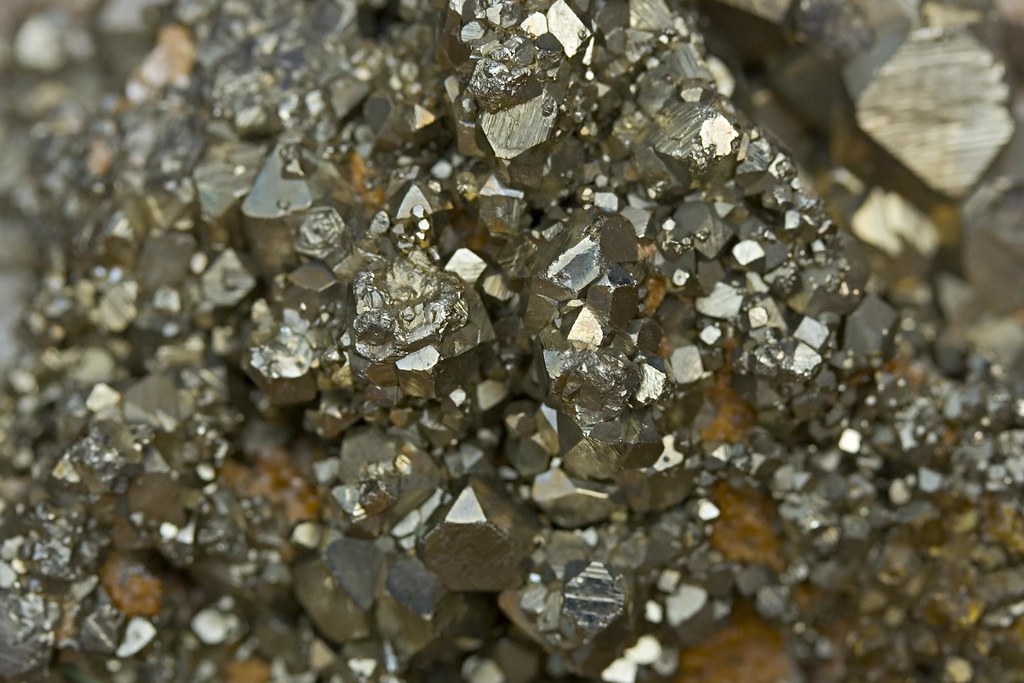
exposure
I have a low opinion of books; they are but piles of stones set up to show coming travelers where other minds have been, or at best signal smokes to call attention. Cadmus and all the other inventors of letters receive a thousand-fold more credit than they deserve. No amount of word-making will ever make a single soul to know these mountains. As well seek to warm the naked and frost-bitten by lectures on caloric and pictures of flame. One day's exposure to mountains is better than cartloads of books. See how willingly Nature poses herself upon photographer's plates. No earthly chemicals are so sensitive as those of the human soul. All that is required is exposure, and purity of material.
-- John Muir The Wilderness World of John Muir ed. Edwin Way Teale
Tuesday, September 25
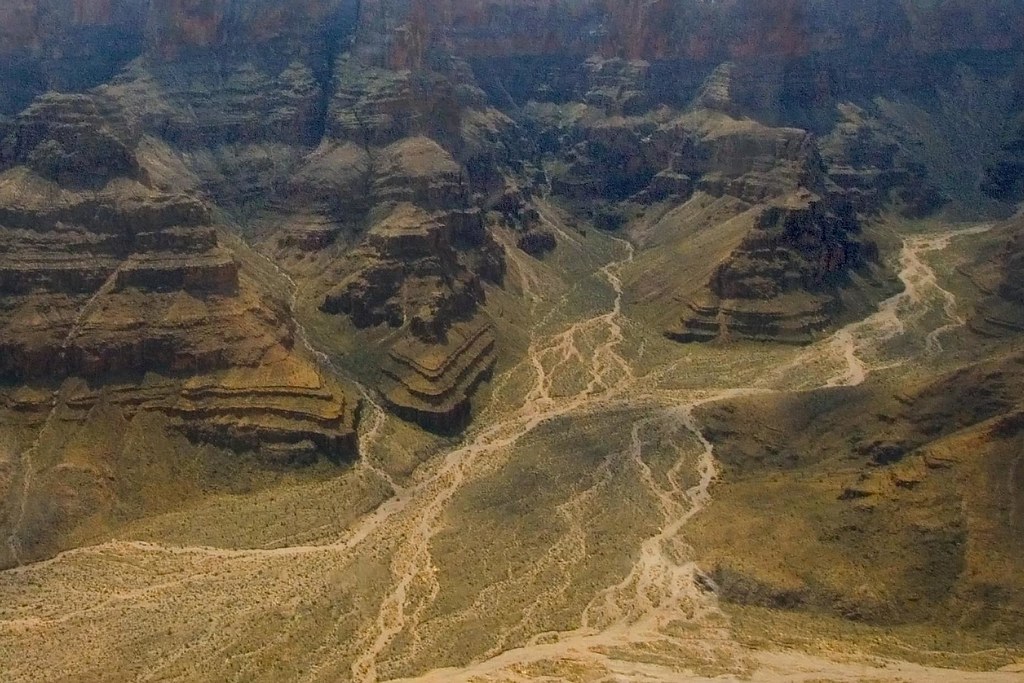
that trail
Every inch of that trail was dear to me, every delicate curve about the old pinon roots, every chancy track along the face of the cliffs, and the deep windings back into shrubbery and safety. The wild-currant bushes were in bloom, and where the path climbed the side of a narrow ravine, the scent of them in the sun was so heavy that it made me soft, made me want to lie down and sleep. I wanted to see and touch everything, like home-sick children when they come home. When I pulled out on top of the mesa, the rays of sunlight fell slantingly through the little twisted pinons,—the light was all in between them, as red as a daylight fire, they fairly swam in it. Once again I had that glorious feeling of being on the mesa, in a world above the world.
-- Willa Cather The Professor's House
Thursday, September 20
Subscribe to:
Comment Feed (RSS)