Visible Mending
5 hours ago
Waves have a curious kind of being, even water waves. A wave in deep water, moving in a certain direction along the surface, is composed of water that itself never actually moves in that direction. Instead, the water molecules only go up and down, as a buoy will reveal, while the wave appears to move horizontally. Even though it appears to be as solid and substantial as any material object, a wave is a moving form, not simply a single body. At each successive instant, a wave is an ever-new assemblage of water, whose changing individuality is subsumed under the outward form of the whole wave. In this sense, a wave is a process, not a substance, as Maxwell noted. Waves interfere with each other because they are interchangeable and thus not distinguishable; two processes can coincide in space and time, but two substances cannot. Thus the wave reveals a whole new possibility of identity, for one identifies waves by their amplitude (that is, height) and by their wavelength or frequency, rather than by the ever-changing bits of water that make up the wave at any time. Even if one distinguishes one wave from another as they approach from a distance, when they pass through each other, one can no longer sustain that distinction, which makes sense only in the context of ordinary bodies.
-- Peter Pesic Seeing Double: Shared Identities in Physics, Philosophy, and Literature

One does not paint yesterday, one does not even paint today, one paints tomorrow, one paints what will be, one paints 'the imminence of.'
And to do that, letting go of all ties, one flings oneself beyond the ego. This is perhaps the greatest lesson painting gives us: flinging oneself beyond the ego. For the ego is the last root preventing flight. Or the last anchor. One has to unfasten oneself the best one can, with a snap, or by slowly filing away the soul-ring of lead.
I imagine it's easier for a landscape painter than for a writer to get free; the charm of the visible world is so powerful. At times, the painter's ego is no more attached than a milk tooth. A pull, and straight away, with a leap, in the middle of creation. We are born together. It's raining. We know nothing. We are part of everything.
-- Hélène Cixous "The Last Painting or the Portrait of God" Coming to Writing
Tr. Sarah Cornell, Susan Sellers and Deborah Jenson
Hélène Cixous
A portion of this essay can be read online here
From somewhere near the well we
heard singing, voice an unheard-of
porridge, capsicum and roux,
"Shadow
mouth," it lamented, "shook my tree."
More than could be carried we caught,
were whisked away by, movement the
one mooring we knew. Eyes tightly
shut, one tear squeezed out by the
impending end, what we wanted
was to
endlessly verge on exit, angling
out, tangent to circle's edge, on
our way where we'd be the last to
say . . . Let all edges converge, it
seemed
we said, cut away would-be end. Shell's
edge, knife's edge, pearl we'd be
prompted by, refugees from where
likewise last to say . . . It wasn't
wander what we did, we circled. Frayed
at its
edge though it was, wheel of soul, verge
we were driven by . . . Verge that we wanted
verge was the song we sang had there been a
song we sang. No song left our lips.
Nonsonant, we rounded circle's edge,
nonsonant ring shout, verge our muse
and mount. Verge that we wanted verge
we bordered on singing. No song left
our lips. It wasn't sing what we did,
we
circled. Song was the porridge voice's
privilege. "Shadow mouth," it repeated,
"shook
my tree . . . " Sparks rose near the well, an
extinguished fire, hung like a signal
or a sign of moving on, a symbol, some
said, showing forth . . . "Post-ecstatic"
was
a word we heard, "copacetic" a word we
heard, "After ecstasy what?" a question
posed in smoke . . . it wasn't smolder what we
did, we burned wanting verge, verge
riding
our legs, we
bore thru
-- Nathaniel Mackey, lines from "Song of the Andoumboulou: 50"
Nathaniel Mackey
Read more from "Song of the Andoumboulou: 50"
. . . This morning began so radiantly, now it is becoming a gray day; but first there was a shining as from a brand-new, never used year. And the night was a bright, distant one that seemed to rest above far more than just the earth; one felt that it lay above oceans and far out beyond, above space, above itself, above stars that looked toward its own stars out of endless depths. All that was mirrored in it and held by it above the earth and hardly even held any longer: for it was like a continual overflowing of heavens.
I thought there would perhaps be midnight Mass and went out after eleven; the streets and footpaths between the walls lay there long, like lowered outspread banners, black and white, made of a strip of wall shadow beside a strip of light; for it was the first night after full moon, and the moon stood very high in the sky and sharply outshone all the stars, so that only here and there a distant very big one flared so strongly that some darkness was formed about it. How the illumined rims of the walls dazzled, how the leaves of the olives were made entirely of night, as if cut out of skies, old, no longer used night skies. And the mountain slopes had such an air of lunar decay and towered up out of the houses like something unmastered. And the houses were dark, and where the wooden shutters had not been closed over them, the windows had the faded, translucent look of blind eyes. Finally, on the little piazza under the clock tower, there was standing a crowd of Capri youths in rendezvous. Out of a little coffeehouse with red curtains, which was set into the blackest corner, came now and then the impatient rattling of a tambourine. The arch of a gate spanned a narrow street leading upward and snatched in a bit of sky with its curve and held it against the street. A step in wooden shoes clattered along by the houses, the clock began and struck the last quarter before midnight. But the church was shut, as if it had been closed for decades. And what rang out from over there, far off and yet oddly penetrating, from the olive slopes and from the vineyards, was no Christian singing. Heavy voices full of old wavering laments, long drawn out, without beginning, not as if they were suddenly starting, only—as if one's ear were unexpectedly tuned to some continuously held tone; voices seemingly fetched out again from the hearing of remote mountain-faces; voices that come into being of themselves, as though night wind were caught in the soul of an animal; long, heavy, wavering voices, calls and series of calls of a primeval natural drunkenness, dull, unconscious, more tolerated than willed, and intermittently, laughter breaking out flamelike and quickly consuming itself, short, alert, and warm as out of a summer night, and then again, moonlight; paths, walls, houses, an earth of moonlight, of moon shadow, that keeps still while with strange meaningfulness New Year's midnight strikes, slowly laying stroke on stroke: each all smooth, all spread out, foldless, as if it were to be preserved like that.
I had gone back again to my little house and stood up on its roof and wanted to see a good end in all that and to find a good beginning in myself. And now let us believe in a long year that is given to us, new, untouched, full of things that have never been, full of work that has never been done, full of tasks, claims, and demands; and let us see that we learn to take it without letting fall too much of what it has to bestow upon those who demand of it necessary, serious, and great things.
-- R.M. Rilke Letter to Clara Rilke 1 January 1907
Tr. Jane Bannard Greene and M.D. Herter Norton
As long as we can believe anything
we believe in measure
we do it with the first breath we take
and the first sound we make
it is in each word we learn
and in each of them it means
what will come again and when
it is there in meal and in moon
and in meaning it is the meaning
it is the firmament and the furrow
turning at the end of the field
and the verse turning with its breath
it is in memory that keeps telling us
some of the old story about us.
-- W.S. Merwin
The Poetic 'Shadow' of Memory, Mortality (Merwin on NPR)
Copper Canyon Press is offering this poem as a free broadside to download
In the december graveyard blossom moved
against remembering stone, softer than snow.
Along the christmas river we surprised
buds in the act of daring, sweet as toffee;
fields lay stretched and steaming in the sun,
and smoke was neat as feathers on the sky.
But discandying breath was only held. We felt
the afternoon turn over in its sleep
restless before it woke and blew us elsewhere
to practice separation like a scale
over and over until we run foolish,
to hoard and stroke the past till Now is gone,
to forget the past is now or not at all.
-- P.J. Kavanagh
P.J. Kavanagh
Copernicus would have named
constellations after its
dot-to-dot fizz.
Pinball on the tongue,
like the anticipatory chatter
in a theatre.
See-through, taste-through,
a high octave chill
in fishnet tights,
All lips and no shoulders.
Sweet pretending to be brut,
a very brigand of a wine.
-- Michael Henry
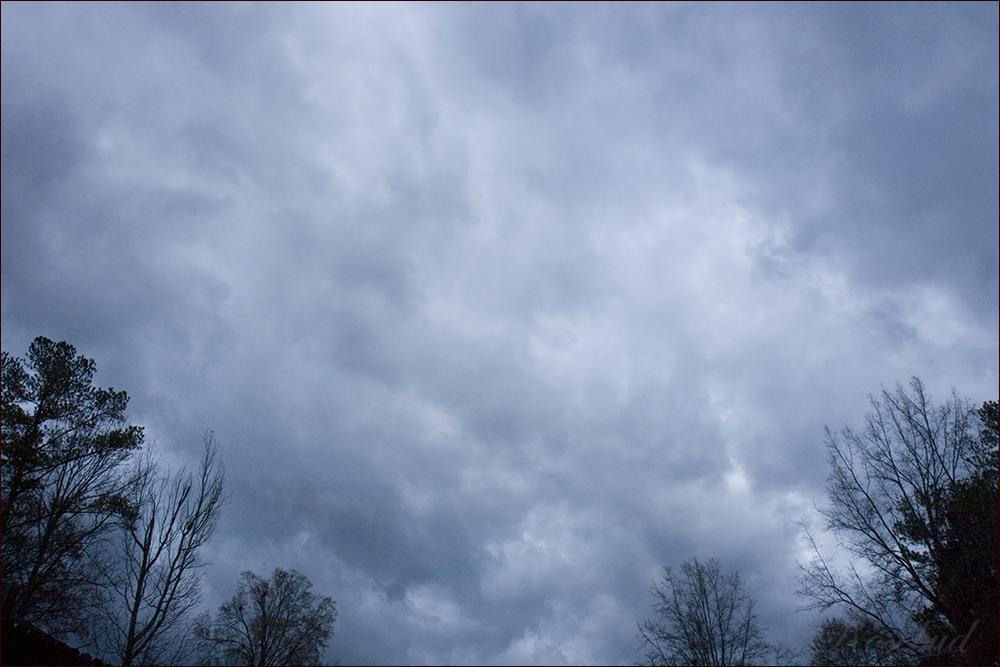
. . .the meteorological processes taking place in the clouds, the formation and dissolution of the mist with different directions of the wind, the play of colors, the generation of hail and rolling thunder are described with individual plasticity. Also many questions are posed which our present discipline of physics knows how to formulate in scientific terminology but which it cannot solve sufficiently.
-- Alexander von Humboldt on the 37th chapter of Book of Job, in Kosmos III
Alexander von Humboldt
Job chapter 37
But outside, everything is immeasurable. And when the level rises outside, it also rises in you, not in the vessels that are partially controlled by you, or in the phlegm of your most unimpressionable organs: but it grows in the capillary veins, drawn upward into the furthermost branches of your infinitely ramified existence. This is where it rises, where it overflows from you, higher than your respiration, and, as a final resort, you take refuge, as though on the tip of your breath. Ah! where, where next? Your heart banishes you from yourself, your heart pursues you, and you are already almost beside yourself, and you can't stand it any longer. Like a beetle that has been stepped on, you flow from yourself, and your lack of hardness or elasticity means nothing any more.
Oh night without objects. Oh window muffled on the outside, oh, doors carefully closed; customs that have come down from times long past, transmitted, verified, never entirely understood. Oh silence in the stair-well, silence in the adjoining rooms, silence up there, on the ceiling. Oh mother, oh one and only you, who faced all this silence, when I was a child.
-- R.M. Rilke Les Cahiers de Malte Laurids Brigge
Tr. Maria Jolas
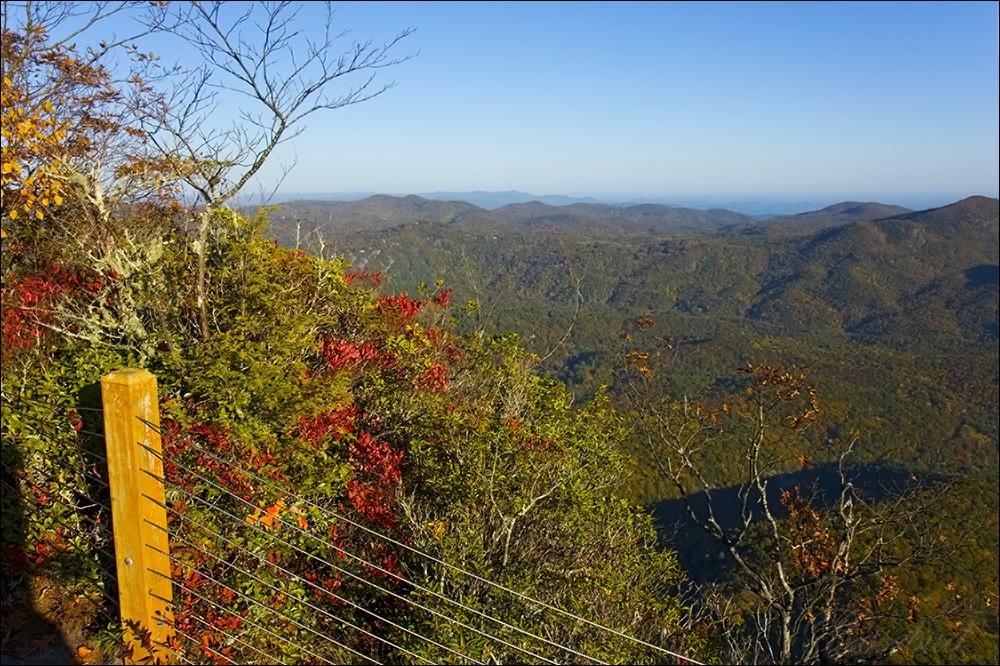
I have taken to walking through this landscape with a mental map that demands completion; the blanks are the outline of what I still need to know. In order to see our connection to the rest of the world, we have to know what lies between, and then look further, beyond the horizon. If there is a hill in front of us, we must look from its top. All of these imperatives would be frightening if they came from outside; coming from within, the dictatorship of geography becomes a means of self-knowledge of not only who we are but where we belong.
-- Ron Matous "Among These Mountains" Parabola 18:2
Ron Matous