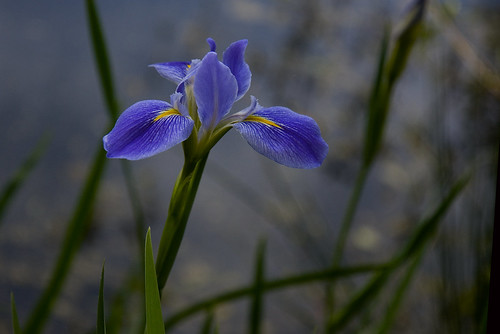
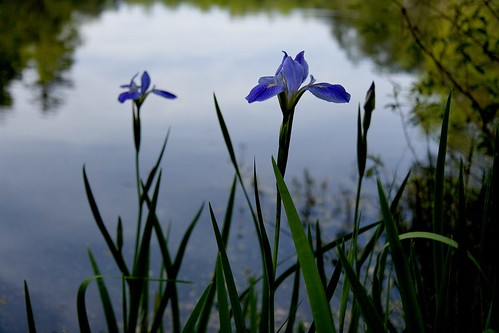
I conceived of the garden as a poem in stanzas. Each terrace contributes to the garden as a whole in the same way each stanza in a poem has a life of its own, and yet is part of a progressive whole as well.
The form provides some degree of repose, letting our mind rest in the comparatively manageable unit of the stanza, or terrace. Yet there is also a need to move on, to look beyond the stanza, into the poem as a whole.
Often, when you finish reading a poem, the impulse is to revisit the beginning now that you've been all the way through it, and then each subsequent trip through the poem is different and colored by having seen the whole thing.
Once you have perceived the garden as a whole, the individual tiers of the garden take on a different form because you have seen them both as a part and as a whole. One of the mysteries of gardening is that the garden reflects the viewer's own state of being at the time, just as your response to a poem lets you know something about your preoccupations or your susceptibility as you read it.
-- Stanley Kunitz The Wild Braid
Wednesday, June 6
the form

Monday, June 4
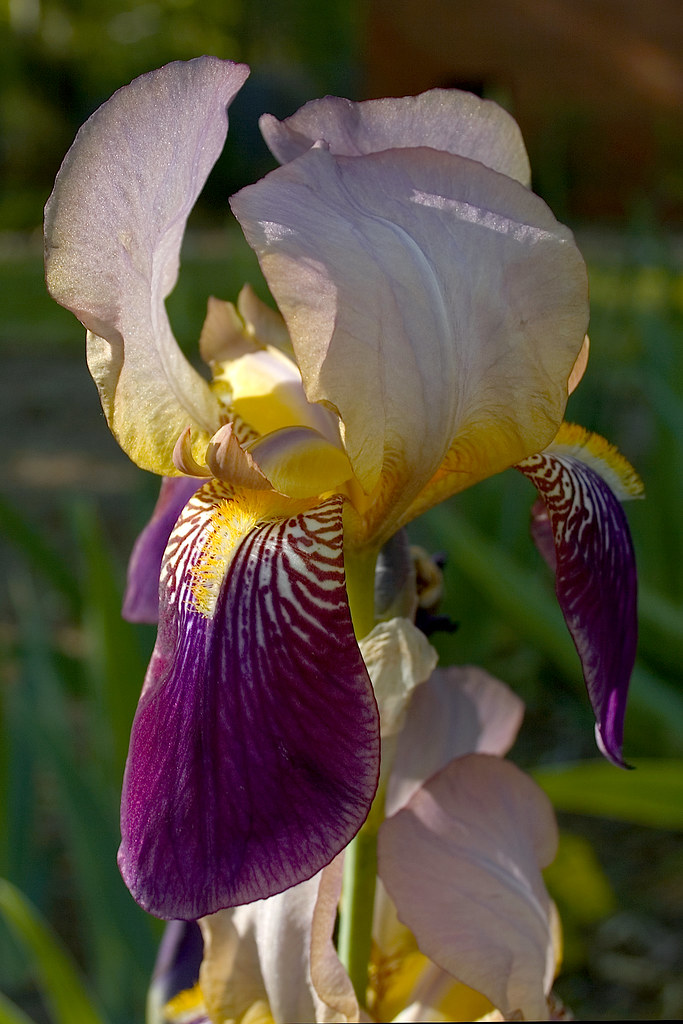
[The style of old age] is not always a product of the years; it is a gift implanted along with his other gifts in the artist, ripening, it may be, with time, often blossoming before its season . . . : it is the reaching of a new level of expression, such as the old Titian's discovery of the all-penetrating light which dissolves the human flesh and the human soul to a higher unity; or such as the finding by Rembrandt and Goya, both at the height of their manhood, of the metaphysical surface which underlies the visible in man and thing, and which nevertheless can be painted; or such as The Art of Fugue which Bach in his old age dictated without having a concrete instrument in mind, because what he had to express was either beneath or beyond the audible surface of music.
-- Hermann Broch, in the introduction to On the Iliad by Rachel Bespaloff
Translated by Mary McCarthy
Sunday, June 3
another play
While I was sitting one night with a poet friend watching a great opera performed in a tent under arc lights, the poet took my arm and pointed silently. Far up, blundering out of the night, a huge Cecropia moth swept past from light to light over the posturings of the actors. "He doesn't know," my friend whispered excitedly. "He's passing through an alien universe brightly lit but invisible to him. He's in another play; he doesn't see us. He doesn't know. Maybe it's happening right now to us."
-- Loren Eiseley The Invisible Pyramid
Loren Eiseley
Saturday, June 2
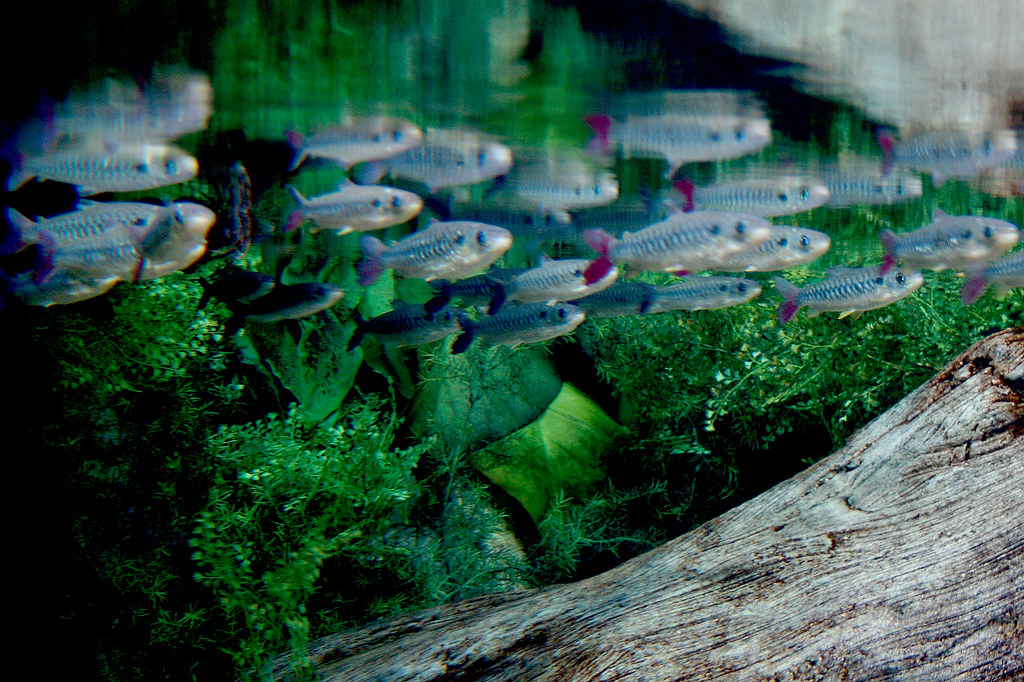
that fleeting sensation of appearance
The beautiful appearance of the dream-worlds, in creating which every man is a perfect artist, is the prerequisite of all plastic art, and in fact, as we shall see, of an important part of poetry also. In our dreams we delight in the immediate apprehension of form; all forms speak to us; none are unimportant, none are superfluous. But, when this dream-reality is most intense, we also have, glimmering through it, the sensation of its appearance . . . And it is not only the agreeable and friendly pictures that he experiences in himself with such perfect understanding: but the serious, the troubled, the sad, the gloomy, the sudden restraints, the tricks of fate, the uneasy presentiments, in short, the whole Divine Comedy of life, and the Inferno, also pass before him, not like mere shadows on the wall—for in these scenes he lives and suffers—and yet not without that fleeting sensation of appearance. And perhaps many will, like myself, recall that amid the dangers and terrors of dream-life they would at times, cry out in self-encouragement, and not without success: "It is only a dream! I will dream on!"
-- Friedrich Wilhelm Nietzsche The Birth of Tragedy
Translated by Clifton P. Fadiman
about The Birth of Tragedy
Thursday, May 31
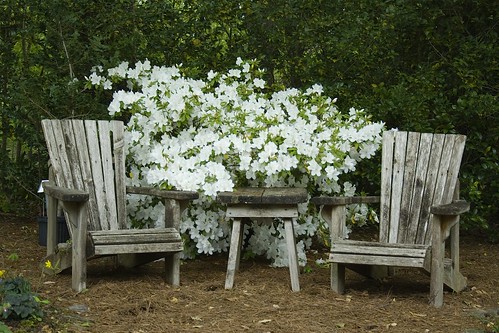
we two, how long we were fool'd
We two, how long we were fool'd,
Now transmuted, we swiftly escape as Nature escapes,
We are Nature, long have we been absent, but now we return,
We become plants, trunks, foliage, roots, bark,
We are bedded in the ground, we are rocks,
We are oaks, we grow in the openings side by side,
We browse, we are two among the wild herds spontaneous as any,
We are two fishes swimming in the sea together,
We are what locust blossoms are, we drop scent around lanes mornings and evenings,
We are also the coarse smut of beasts, vegetables, minerals,
We are two predatory hawks, we soar above and look down,
We are two resplendent suns, we it is who balance ourselves orbic and stellar, we are as two comets,
We prowl fang'd and four-footed in the woods, we spring on prey,
We are two clouds forenoons and afternoons driving overhead,
We are seas mingling, we are two of those cheerful waves rolling over each other and interwetting each other,
We are what the atmosphere is, transparent, receptive, pervious, impervious,
We are snow, rain, cold, darkness, we are each product and influence of the globe,
We have circled and circled till we have arrived home again, we two,
We have voided all but freedom and all but our own joy.
-- Walt Whitman (b. 31 May 1819), from Leaves of Grass
The Walt Whitman Archive
Wednesday, May 30
'I try to follow'
Did the people he photographed in the Dominican Republic know who he was?
"Sometimes someone would come up to me and say, 'You're the guy from Sex and the City.' "
Did he ever join in doing the merengue during a photo shoot?
"A couple of times. I can do a little merengue, It's graceful, but it's difficult to dance. To dance it, you have to seriously study the movements. I try to get a partner who knows what she's doing, and I try to follow."
How about the tango?
"I can't dance the tango to save my life," he says.
-- Mikhail Baryshnikov, interviewed by Milton Esterow in 'A Little Dance with a Digital Camera' ARTnews May 2007
ARTnews
Mikhail Baryshnikov: Dominican Moves
Monday, May 28
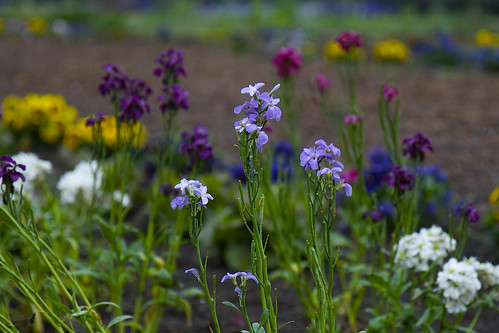
like a hand laid upon the heart
For fragrance is indeed what the past well knew it to be, a refreshment and a strength, a sweet and human pleasure, an exorciser of demons from the body and the besieged and troubled spirit. Subtlest of influences, touching the emotion directly, asking nothing from the mind, it not only wakes in us an emotion of place, but summons up as well a poignant emotion of ourselves as we were in time and the place remembered. The odor of a ploughed field in the spring is like a hand laid upon the heart, having in it all the beauty, the poignancy, and the tenderness of earthly living, all the poetry of the melancholy and ecstasy of spring, of the branch, the new leaf and the warm wind, and the sinking of some last great and solitary winter star.
-- Henry Beston Herbs and the Earth
Friday, May 25
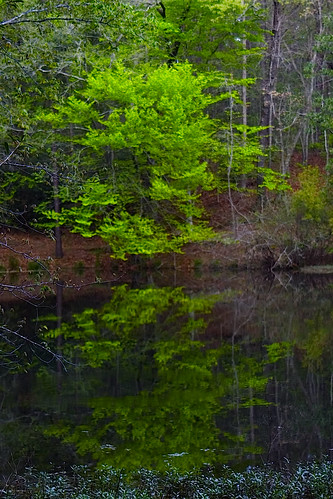
towards the sky
She stood before the mirror in her white slip. As she curved her arm over her head in washing, she remembered how she had sat on the fire escape when a little girl and watched the big girls in the flats across the yards getting ready for their dates. Was some one watching her as she had once watched?
She looked towards the window. Yes, across two yards she saw a little girl sitting on a fire escape with a book in her lap and a bag of candy at hand. The girl was peering through the bars at Francie. Francie knew the girl, too. She was a slender little thing of ten, and her name was Florry Wendy.
Francie brushed out her long hair, braided it and wound the braids around her head. She put on fresh stockings and white high-heeled pumps. Before she slipped a fresh pink linen dress over her head, she sprinkled violet sachet powder on a square of cotton and tucked it inside her brassiere . . .
She looked across the yards and saw that Florry was still staring at her through the bars of the fire escape. Francie waved and called:
"Hello, Francie."
"My name ain't Francie," the little girl yelled back. "It's Florry, and you know it, too."
"I know," said Francie.
She looked down into the yard. The tree whose leaf umbrellas had curled around, under and over her fire escape had been cut down because the housewives complained that wash on the lines got entangled in its branches. The landlord had sent two men and they had chopped it down.
But the tree hadn't died . . . it hadn't died.
A new tree had grown from the stump and its trunk had grown along the ground until it reached a place where there were no wash lines above it. Then it had started to grow towards the sky again.
Annie, the fir tree, that the Nolans had cherished with waterings and manurings, had long since sickened and died. But this tree in the yard—this tree that men chopped down . . . this tree that they built a bonfire around, trying to burn up its stump—this tree lived!
It lived! And nothing could destroy it.
Once more she looked at Florry Wendy reading on the fire escape.
"Goodbye, Francie." she whispered.
She closed the window.
-- Betty Smith A Tree Grows in Brooklyn
Thursday, May 24
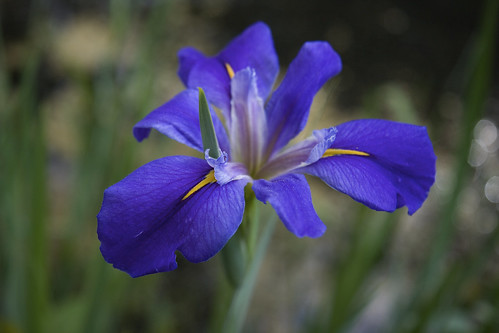
that simple feeling
What I am saying will be taken as a mad paradox, at which one can only be amazed, and yet I cannot help saying what I think—namely, that people of our circle, of whom some write verses, stories, novels, operas, symphonies, sonatas, paint various sorts of pictures, make sculptures, while others listen to them and look at them, and still others evaluate and criticize it all, argue, denounce, triumph, erect monuments to each other, and have done so over the course of several generations, that all these people, artists, public, and critics, with very few exceptions, have never, save in early childhood and youth, before they heard any reasoning about art, experienced that simple feeling, familiar to the simplest man and even to a child, of being infected by the feelings of another, which makes us rejoice over another's joy, grieve over another's grief, merge our souls with another's, and which constitutes the essence of art, and that therefore these people not only cannot distinguish true art from its counterfeits, but always mistake the worst and most false for genuine art, without noticing the genuine, because counterfeits are always more flashy, while true art is modest . . . The effect of the true work of art is to abolish in the consciousness of the perceiver the distinction between himself and the artist, and not only between himself and the artist, but also between himself and all who perceive the same work of art. It is this liberation of the person from his isolation from others, from his loneliness, this merging of the person with others, that constitutes the chief attractive force and property of art.
-- Leo Tolstoy What is Art?
Translated by Richard Pevear and Larissa Volokhonsky