


Thursday, January 31
Wednesday, January 30
wings
Whether or not they are of angels
or just the makeshift would-be
of human flight from humdrum
to grace, theirs is a sudden restlessness
on buoyant shoulders, an uplift
aimed at joy and making it.
So for every earthbound thought
there's the counter-weight,
a grief that covers its face in shame
then rises with the season
as if from sleep, unfolding wings
to journey through the brightness of the air.
-- John Mole
John Mole

Tuesday, January 29

poem
It seems a flower, but not a flower;
It seems a mist, but not a mist.
It comes at midnight,
It goes away in the morning.
Its coming is like a spring dream that does not last long.
And its going is like the morning cloud. You will find it nowhere.
-- Bai Juyi
Translated by Ching Ti
Monday, January 28
Sunday, January 27
a bell of mindfulness
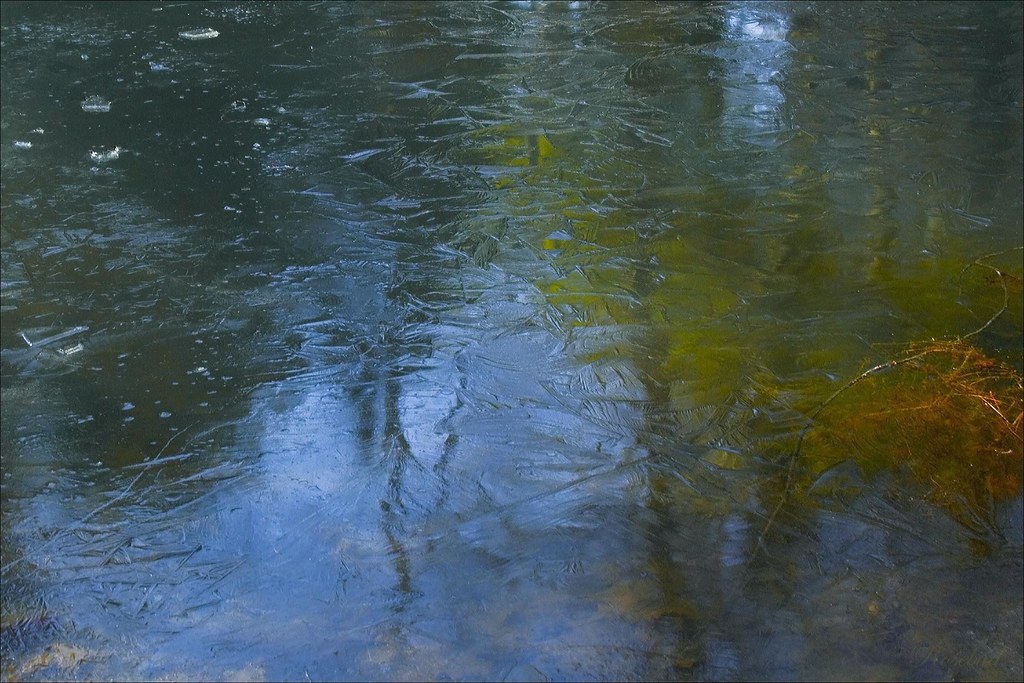
My poetry is something that happens throughout the day. When I water the vegetables or wash dishes, poetry is born in me. When I sit down at the writing table, all I do is deliver the poems. Poetry comes as an inspiration and is the fruit of my mindful living. After a poem is born, I may realize that it helped me. The poem is like a "bell of mindfulness."
Sometimes you need to reread a poem you have written because it takes you back to a wonderful experience—it reminds you of the beauty available inside of you and all around you. So a poem is a flower you offer to the world, and at the same time, it is a bell of mindfulness for you to remember the presence of beauty in your daily life.
-- Thich Nhat Hahn be free where you are
Thursday, January 24
Tuesday, January 22
silence not absence
The technology of silence
The rituals, etiquette
the blurring of terms
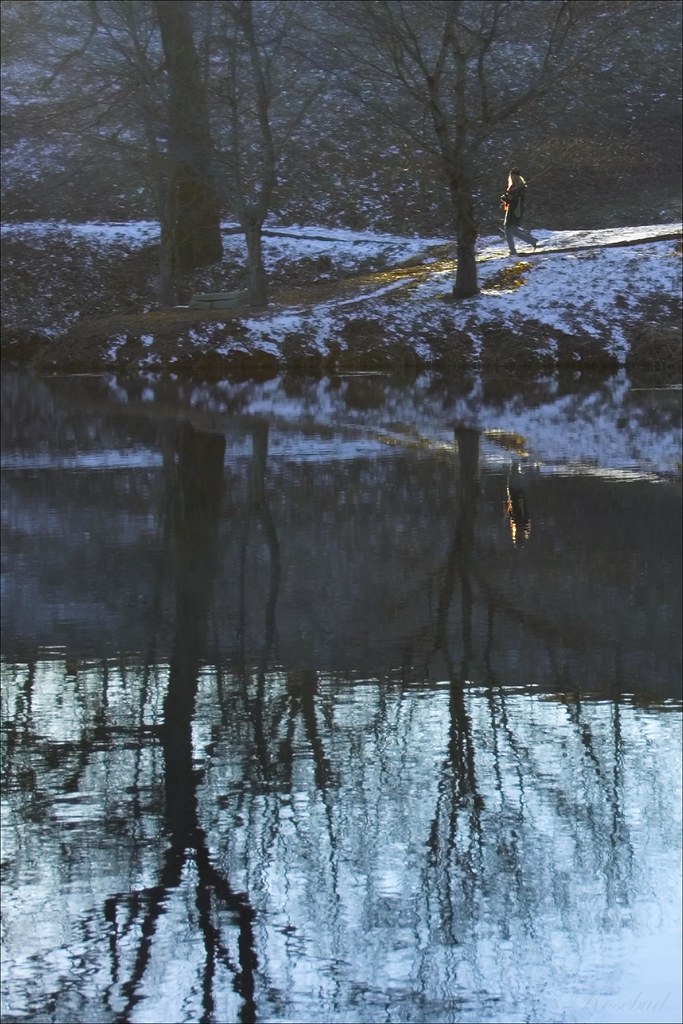
silence not absence
of words or music or even
raw sounds
Silence can be a plan
rigorously executed
the blueprint to a life
It is a presence
it has a history a form
Do not confuse it
with any kind of absence
-- Adrienne Rich, from "Cartographies of Silence"
Adrienne Rich
Saturday, January 19
not making music, but listening

White Painting by Robert Rauschenberg (Guggenheim Museum)
Christopher Coppola's JC Meditation 001
In the nature of the use of chance operations is the belief that all answers answer all questions.
-- John Cage I-VI
In 1952, David Tudor sat down in front of a piano for four minutes and thirty-three seconds and did nothing. The piece 4'33'' written by John Cage, is possibly the most famous and important piece in twentieth century avant-garde. 4'33'' was a distillation of years of working with found sound, noise, and alternative instruments. In one short piece, Cage broke from the history of classical composition and proposed that the primary act of musical performance was not making music, but listening. [more]
John Cage's 4'33" by David Tudor
another 4'33"
From a review of Evgeny Kissin: John Cage 4'33" (DVD): The Stokowski transcription is a first performance and therefore of great interest. It was his last work and only discovered well after his death in 1977. The orchestral size is the same as for his Bach transcriptions but with added tubas. Some may consider that this over-romanticises the purity of Cage's essentially classical conception but I enjoyed it immensely. With regard to the orchestra – who have to pass a large clock round every one of the players without making a sound in exactly 4’33" – this work brings as big a challenge to them as any of Ives’s more extreme utterances. The New York Philharmonic mostly manages it with aplomb (apart from one of the violas who almost dropped the clock) in what was apparently an encore after a stirring performance of Rachmaninov’s Third Piano Concerto. Serebrier (a protégé of Stokowski) presides with authority – he starts off with the clock and at the very end it finally reaches Kissin just before the crowd goes wild.
Art may be practiced in one way or another, so that it reinforces the ego in its likes and dislikes, or so that it opens that mind to the world outside, and outside inside. Since the forties and through the study with D.T. Suzuki of the philosophy of Zen Buddhism, I've thought of music as a means of changing the mind. I saw art not as something that consisted of a communication from the artist to an audience but rather as an activity of sounds in which the artist found a way to let the sounds be themselves. And, in being themselves, to open the minds of people who made them or listened to them to other possibilities than they had previously considered.
-- John Cage, quoted by Larry J. Solomon here
CRC Beta v0.01
Sunt Lacrimae Rerum
The glittering dance of brilliants must be strung
On that dark thread of sadness which is time,
No matter what bright melodies are sung.
When great symphonic combers swell and climb
Then curl and, swooping, rush towards the shore,
We hear a faint and melancholy chime.
This might come from a drowned cathedral or
Be carried on the wind from inland tower
In market-place, or church on distant moor.
Beneath the surging glory and the power
Of Beethoven or Bach, or tenderness
Of Schubert lieder's frailer sonic flower
We hear the spectral sighing of distress,
For time is music's element and we
Know murderous time can offer no redress.
Yet which of us, I wonder, were he free
To choose, would wish away the voice that sings
The keening descant of mortality
Inseparable from all that music brings
Of love, heart-piercing truth, the tears in things.
-- Vernon Scannell
Vernon Scannell
Wednesday, January 16
growing up in the digital world
The John D. and Catherine T. MacArthur Foundation Series on Digital Media and Learning examines the effect of digital media tools on how people learn, network, communicate, and play, and how growing up with these tools may affect a person's sense of self, how they express themselves, and their ability to learn, exercise judgment, and think systematically.
The full text of each volume in the Series is provided for free and open access thanks to the generous support of the MacArthur Foundation. The full text of these chapters is openly available [here]
The John D. and Catherine T. MacArthur Foundation Series on Digital Media and Learning
Tuesday, January 15
Friday, January 11
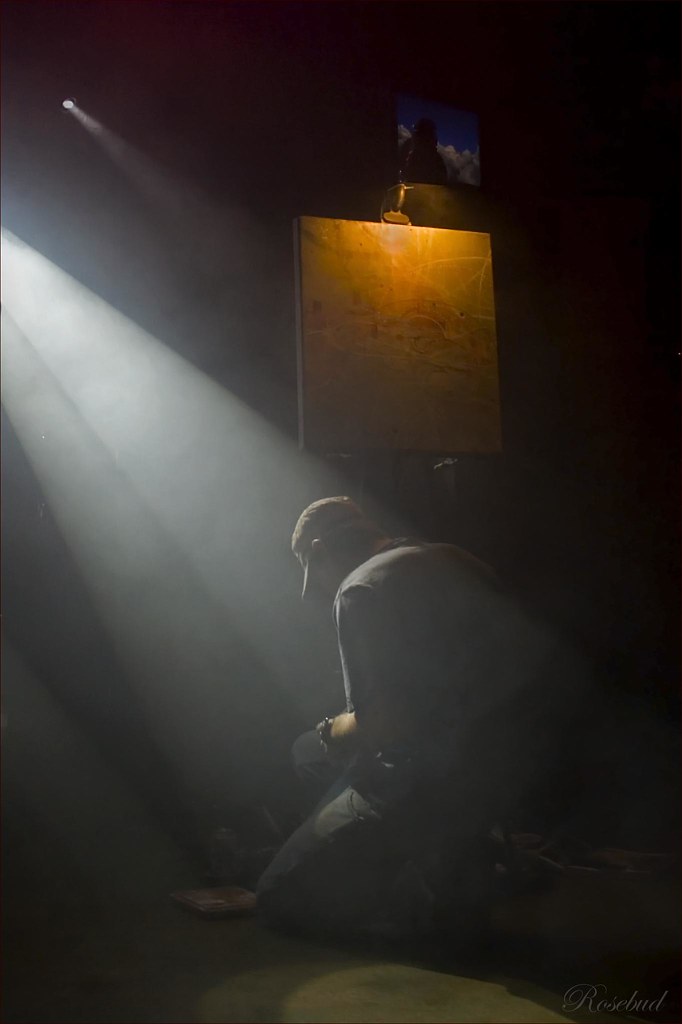
how the light gets in
Ring the bells that still can ring,
forget your perfect offering.
There is a crack, a crack in everything.
That’s how the light gets in,
that’s how the light gets in,
that’s how the light gets in…
-- Leonard Cohen "Anthem"
Thursday, January 10
Tuesday, January 8
Monday, January 7
Friday, December 28
the child
The only simplicity that matters is the simplicity of the heart. If that be gone, it can be brought back by no turnips or cellular clothing; but only by tears and terror and the fires that are not quenched. If that remains, it matters very little if a few Early Victorian armchairs remain along with it...So long as human society will leave my spiritual inside alone, I will allow it, with a comparative submission, to work its wild will with my physical interior. I will submit to cigars. I will meekly embrace a bottle of Burgundy. I will humble myself to a hansom cab. If only by this means I may preserve to myself the virginity of the spirit, which enjoys with astonishment and fear. I do not say that these are the only methods of preserving it. I incline to the belief that there are others. But I will have nothing to do with simplicity which lacks the fear, the astonishment, and the joy alike. I will have nothing to do with the devilish vision of a child who is too simple to like toys.
The child is, indeed, in these, and many other matters, the best guide. And in nothing is the child so righteously childlike, in nothing does he exhibit more accurately the sounder order of simplicity, than in the fact that he sees everything with a simple pleasure, even the complex things. The false type of naturalness harps always on the distinction between the natural and the artificial. The higher kind of naturalness ignores that distinction. To the child the tree and the lamp-post are as natural and as artificial as each other; or rather, neither of them are natural but both supernatural. For both are splendid and unexplained. The flower with which God crowns the one, and the flame with which Sam the lamplighter crowns the other, are equally of the gold of fairy-tales. In the middle of the wildest fields the most rustic child is, ten to one, playing at steam-engines. And the only spiritual or philosophical objection to steam-engines is not that men pay for them or work at them, or make them very ugly, or even that men are killed by them; but merely that men do not play at them. The evil is that the childish poetry of clockwork does not remain. The wrong is not that engines are too much admired, but that they are not admired enough. The sin is not that engines are mechanical, but that men are mechanical.
-- G.K. Chesterton "On Sandals and Simplicity" Heretics (1905)
Heretics
Subscribe to:
Comment Feed (RSS)